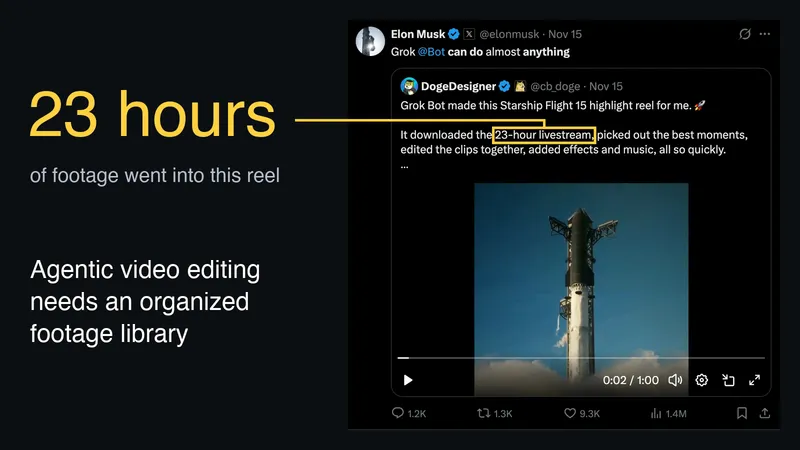
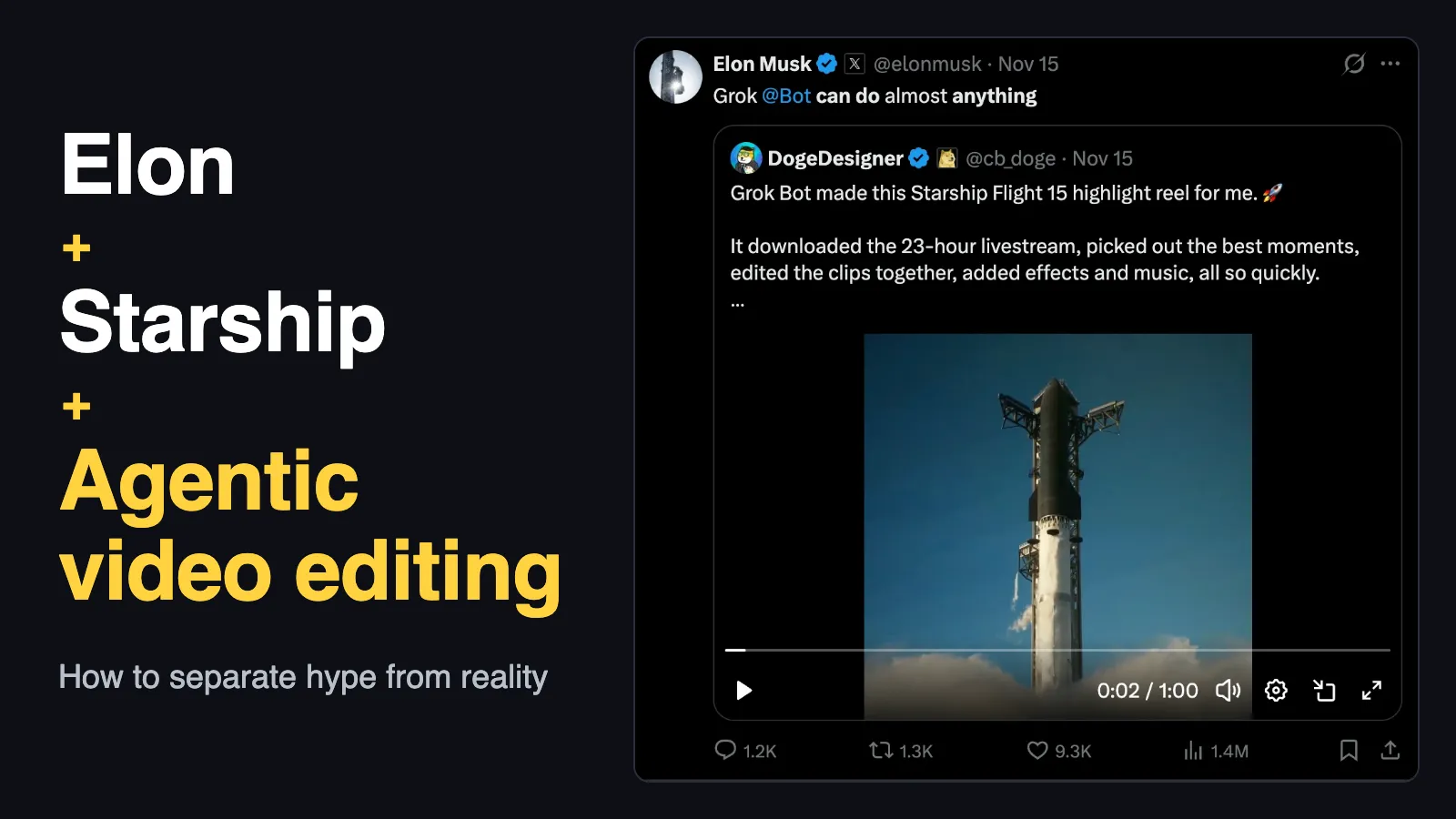
Starship launched. An X user had GrokBot cut the 23-hour livestream into a one-minute highlight reel. Elon Musk replied that GrokBot can do almost anything.
That is agentic video editing, and it is real. Before you read anything into it, look at who made the video.
Who Made This Video?
Start with the person behind the reel, not the reel.
- It was low stakes. Nothing depended on it.
- Editing isn't their job. Nothing suggests they are paid for the quality or quantity of their videos.
- No one critiqued it. No creative director, brand review or client.
- No one measured it. No click-through rate, hook rate, sales or ROAS.
- It may have flaws, and no one cares.
That is a tinkerer: someone exploring what an agent can do, with nothing riding on the result.
Why This Video Makes Marketing Leaders Susceptible to Hype
The reel looks finished. It came from an agent. And it arrived with Elon Musk's endorsement. A marketing leader who sees it can easily conclude that agentic video editing is ready, and that their team should be working this way.
That is how hype works. A result made where nothing was at stake gets read as proof of what will work where everything is.
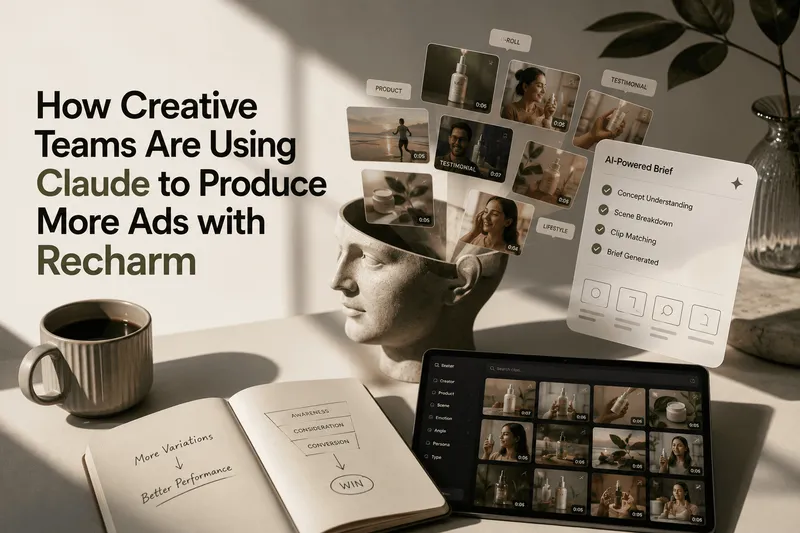
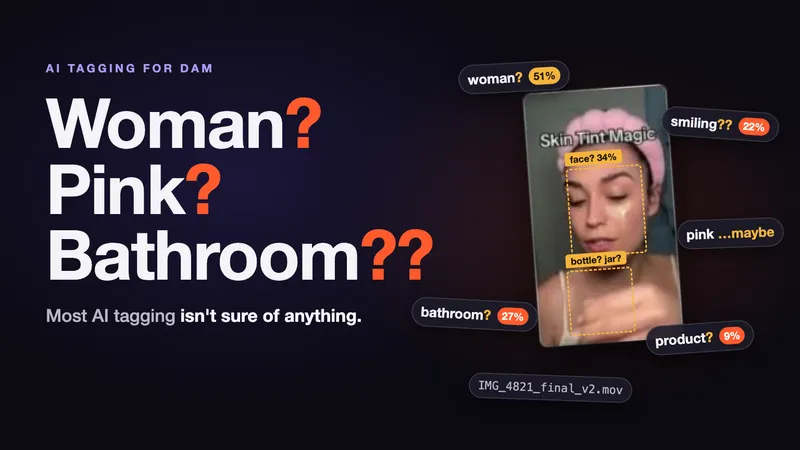
Marketing teams do need Claude and GrokBot. But they need more: an organized footage library for the agent to search, editors to finish the cut, and the many eyes that critique it before it runs.
How to Tell Agentic Video Editing Hype From Something You Can Use
When you see an example or a piece of advice, ask four questions:
- Was there a real job to do? Or was it made to see what was possible?
- Was it critiqued? Did anyone send it back?
- Was the outcome measured? In clicks, sales or ROAS, not views.
- Does the person work this way in their own job? Or is it "do as I say, not as I do"?
Four yeses mean it is real, actionable and usable. Mostly noes mean it is a sign of what is possible, not a way of working.
The answers come down to who is talking. There are two types of agentic video editors:
| Tinkerers | Strategists and video editors | |
|---|---|---|
| Why they do it | Trying to find an edge | They have a real job to do |
| Editing background | Never edited, don't like editing | Editing is the job |
| How the work is judged | It doesn't get critiqued | Many eyes on every cut |
| Bar for polish | Loose | Measured on throughput and quality |
| Their own job | "Do as I say, not as I do" | This is how the job gets done |
| Where you find them | On X, driving the hype | Absent from X and social media |
Listen to the second type. They are harder to find, because they are busy, so you usually have to ask them.
How Working Editors Use Agentic Video Editing
They use Claude or Codex to edit the dumb stuff, then finish in CapCut, Premiere or DaVinci.
The dumb stuff is work like finding clips, rough assemblies, and the editing details humans skip under time pressure. The finish stays on the timeline, because every cut still has to pass QA before launch.
Start with your own strategists and editors, and ask what they kept using after the first week. We wrote up what we kept in our lessons from making ads with Claude.
FAQs
How do I know if an agentic video editing example is hype?
Ask whether there was a real job to do, whether the work was critiqued, whether the outcome was measured, and whether the person works that way in their own job. Mostly noes mean hype.
Whose advice on agentic video editing should marketing leaders listen to?
Working strategists and video editors, who are measured on throughput and quality. Not tinkerers, who are exploring with nothing at stake.
Can an AI agent replace a video editor?
Not for work that gets critiqued and measured. The message, the finish and the judgment still sit with people.