
Brand guidelines are documented rules that define how a brand's visual and verbal identity should be used across different teams, channels, and partners. They help create consistency in everything from logo usage and colors to typography, imagery, and tone of voice.
As more people and teams contribute to a brand's content, having clear guidelines makes it easier to create work that follows the same visual and verbal standards. This guide covers what brand guidelines are, the key elements they typically include, real-world examples, and practical tips for creating guidelines that teams can actually use.
TL;DR
Brand guidelines document how a brand's logo, colors, typography, imagery, and voice should be used consistently.
Effective guidelines prioritize clarity and usability, giving people practical rules they can apply when creating brand materials.
Core elements typically include logo usage, color palettes, typography, imagery, and tone of voice.
Brand guidelines can vary considerably in how they balance consistency, flexibility, and brand personality.
For brands that produce video content, guidelines can also cover motion, on-screen text, color treatment, audio, and other video-specific elements.
Why Trust This List
The examples featured in this guide are based on publicly available brand guideline resources and were selected to show different approaches to documenting and maintaining a brand identity. They are included for their usefulness as examples, not because of paid placement or sponsorship.
Research Methodology and Selection Criteria
The examples were selected to provide variety across industries, organization sizes, and brand styles. Each example was chosen because its publicly available guidelines demonstrate specific elements that can be useful to study, such as logo rules, typography, visual systems, tone of voice, or flexibility.
What Are Brand Guidelines?
Brand guidelines are a documented framework for how a brand's visual and verbal identity should be used. They can cover everything from logo placement and color usage to typography, imagery, messaging, and tone of voice.
The purpose is to give everyone working with the brand, including internal teams, regional teams, designers, marketers, and external agencies, a shared reference for creating consistent brand materials.
Most guidelines cover core areas such as logo usage, color palette, typography, imagery, and tone of voice, although the depth and format can vary depending on the brand, industry, and number of people or teams using the guidelines.
What Makes Great Brand Guidelines?
Good brand guidelines need to be detailed enough to provide clear direction without becoming difficult to use. The most useful guides focus on practical rules, consistency, and keeping the guidance current.
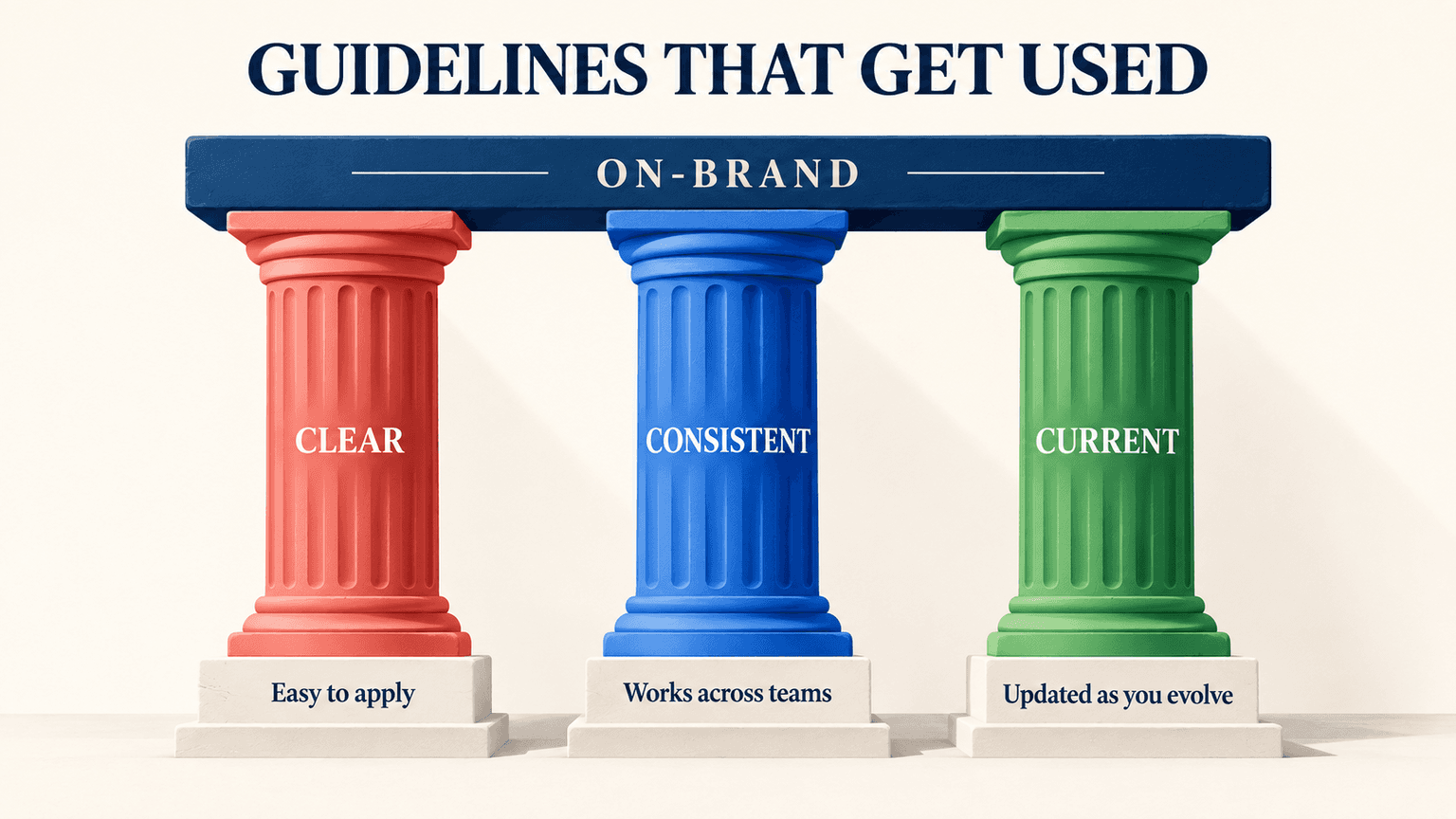
Clarity over completeness. Guidelines should make important decisions easy to understand and apply. Clear examples, specifications, and dos and don'ts can be more useful than lengthy explanations that are difficult to reference during day-to-day work.
Consistency across teams. Guidelines give internal teams and external partners a shared reference for creating brand materials. Clear rules can reduce the need for repeated clarification around elements such as colors, logos, typography, and visual treatments.
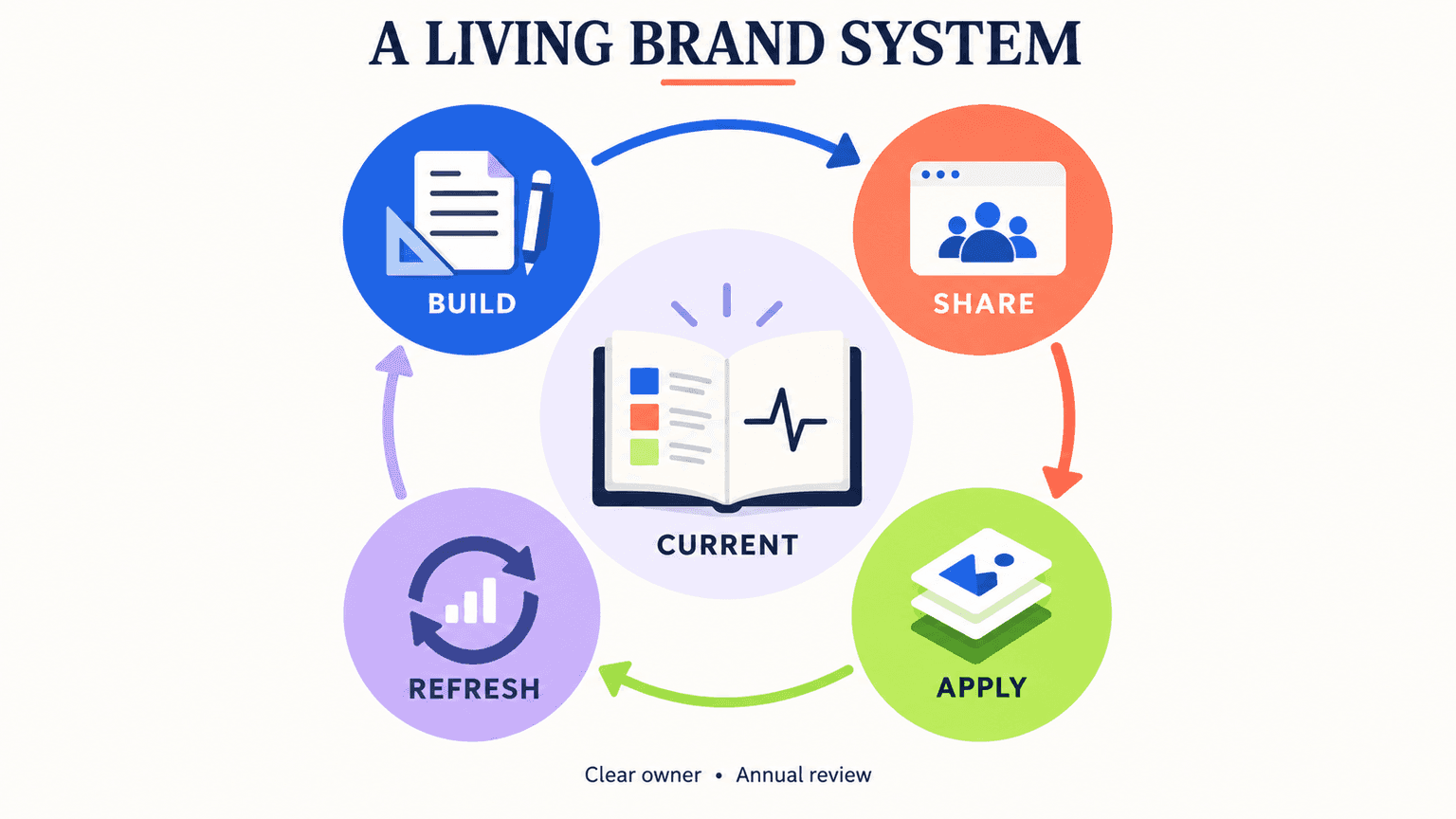
A living document. Brand guidelines should be updated when the brand changes. New products, markets, campaigns, or visual identity updates may require corresponding changes to the guidelines so teams are working from current information.
Elements of a Brand Style Guide
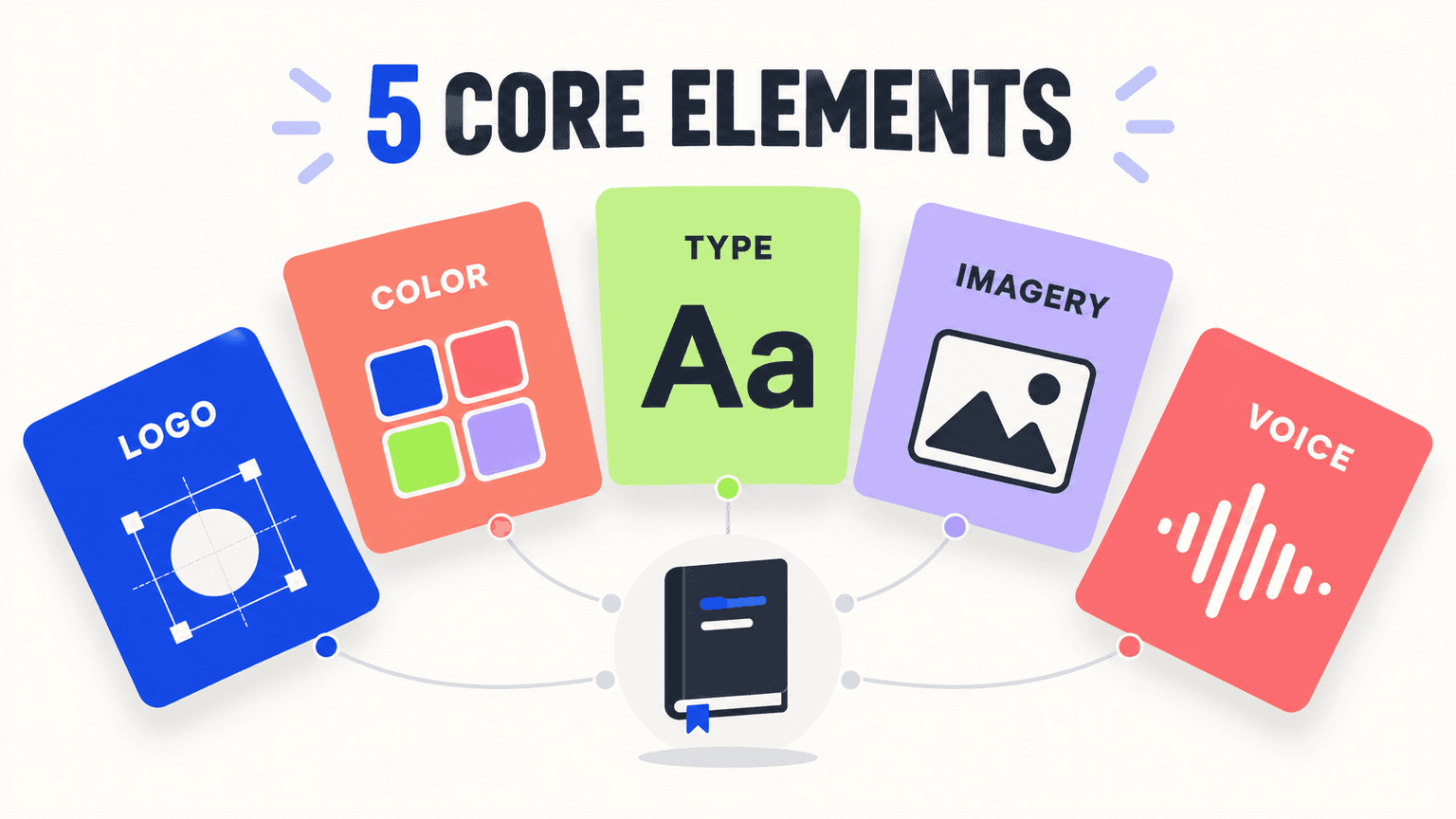
A brand style guide typically brings together the core rules people need when creating or reviewing brand materials. The exact contents vary by organization, but logo usage, color, typography, imagery, and tone of voice are common building blocks.
Logo Usage
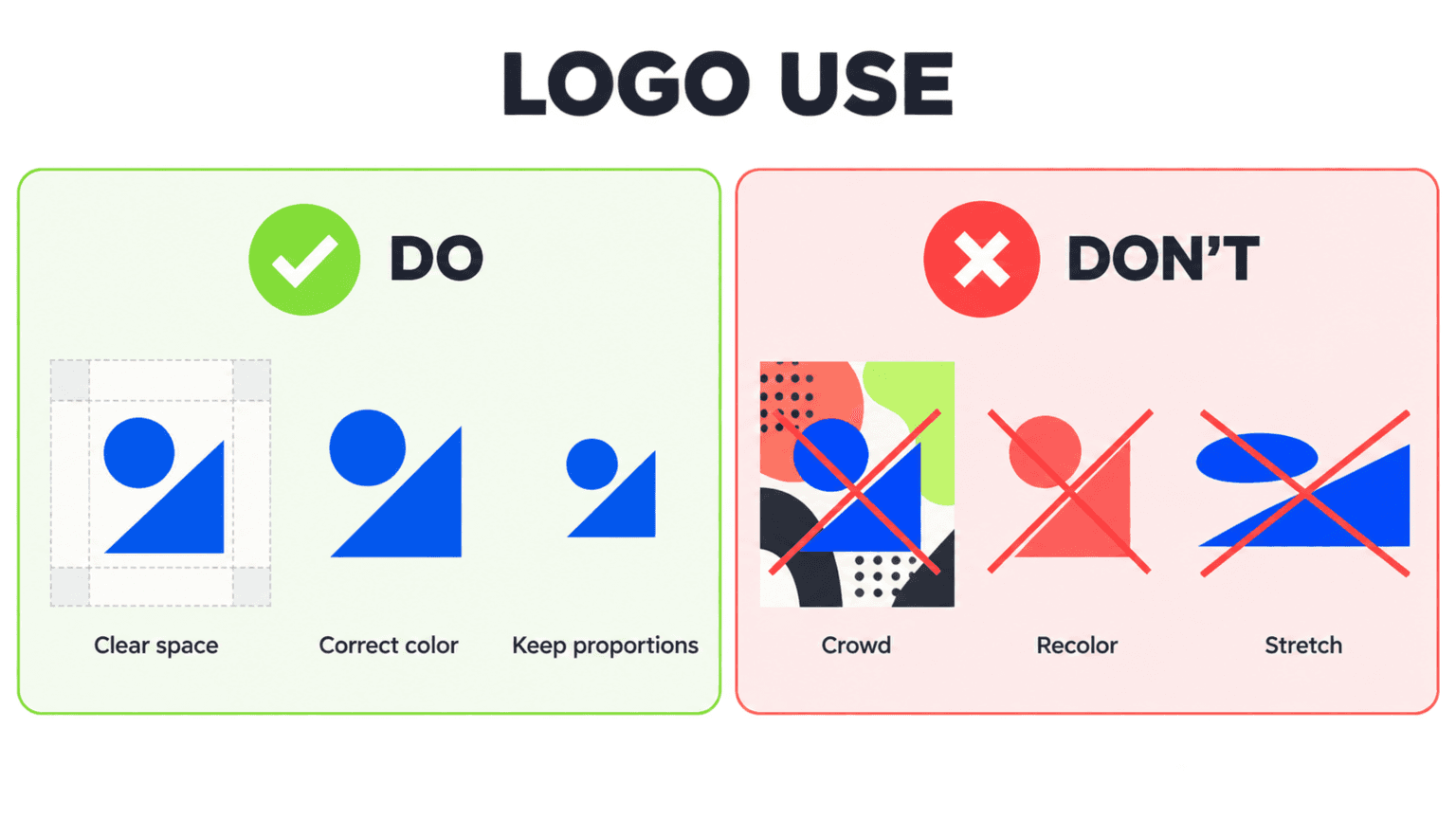
Logo guidelines can cover approved logo variations, minimum clear space, minimum size, appropriate backgrounds, and examples of incorrect usage. Misuse examples can show common problems such as stretching, recoloring, distorting, or placing the logo on an unsuitable background.
Color Palette
A color palette defines the approved colors a brand uses and may include specifications such as HEX, RGB, CMYK, or Pantone values, depending on where the colors will be used. Providing exact values helps teams reproduce brand colors consistently across digital and print materials.
Typography
Typography guidelines specify the approved typefaces and how they should be used. They may define a hierarchy for headlines, subheadings, body text, and other elements, along with suitable fallback fonts for environments where the primary typeface is unavailable.
Imagery and Tone of Voice
Imagery guidelines explain the visual characteristics a brand should use across photography, illustration, and other visual content. They can cover factors such as composition, subject matter, color treatment, and overall visual style.
Tone of voice guidelines define how the brand should communicate in writing, including characteristics such as formal or casual, playful or authoritative, and how the tone should adapt across different channels and audiences.
Real-World Brand Guidelines Examples
Looking at established brands can make it easier to understand what effective brand guidelines look like in practice. These examples show how different organizations approach visual identity, tone, flexibility, and consistency.
1. Spotify. Spotify is known for a bold visual identity built around its signature green, strong typography, photography, and flexible use of color. Its guidelines show how a brand can give creative teams room to experiment while maintaining recognizable visual cues.
2. Mailchimp. Mailchimp combines a distinctive illustration style with a clear, personality-driven tone of voice. Its guidelines are a useful example of how verbal identity can be documented in detail, giving teams practical direction beyond broad instructions such as "friendly" or "professional."
3. Slack. Slack's guidelines document how its logo and visual identity should be used across different contexts. This is particularly useful for a product that appears across websites, apps, marketing materials, and third-party integrations, where consistent logo treatment matters.
4. Airbnb. Airbnb's visual identity provides a useful example of how brands can document logo and symbol usage through clear rules and visual examples. Its guidelines demonstrate how showing incorrect applications can make restrictions easier for teams to understand and follow.
5. Netflix. Netflix uses a tightly controlled visual identity across its global marketing and communications. Its guidelines are a useful example of how clear restrictions around core brand elements can help maintain consistency across a large number of markets and channels.
6. Uber. Uber's evolving visual identity shows how brand guidelines can support a global organization as its identity changes over time. Its system provides an example of how core brand elements can be adapted across different markets and applications while remaining part of the same identity.
7. IBM. IBM has one of the most established corporate identity systems, with detailed guidance covering elements such as typography, grids, logos, and visual composition. It demonstrates how precise rules can help maintain consistency across a large and complex organization.
8. Girl Scouts of the USA. The Girl Scouts of the USA provides an example of brand guidelines being used across a large, decentralized organization. Its guidelines help different teams and local councils apply a shared identity while still allowing their communications to work in different local contexts.
Brand Guidelines for Video: The Gap Most Guides Miss
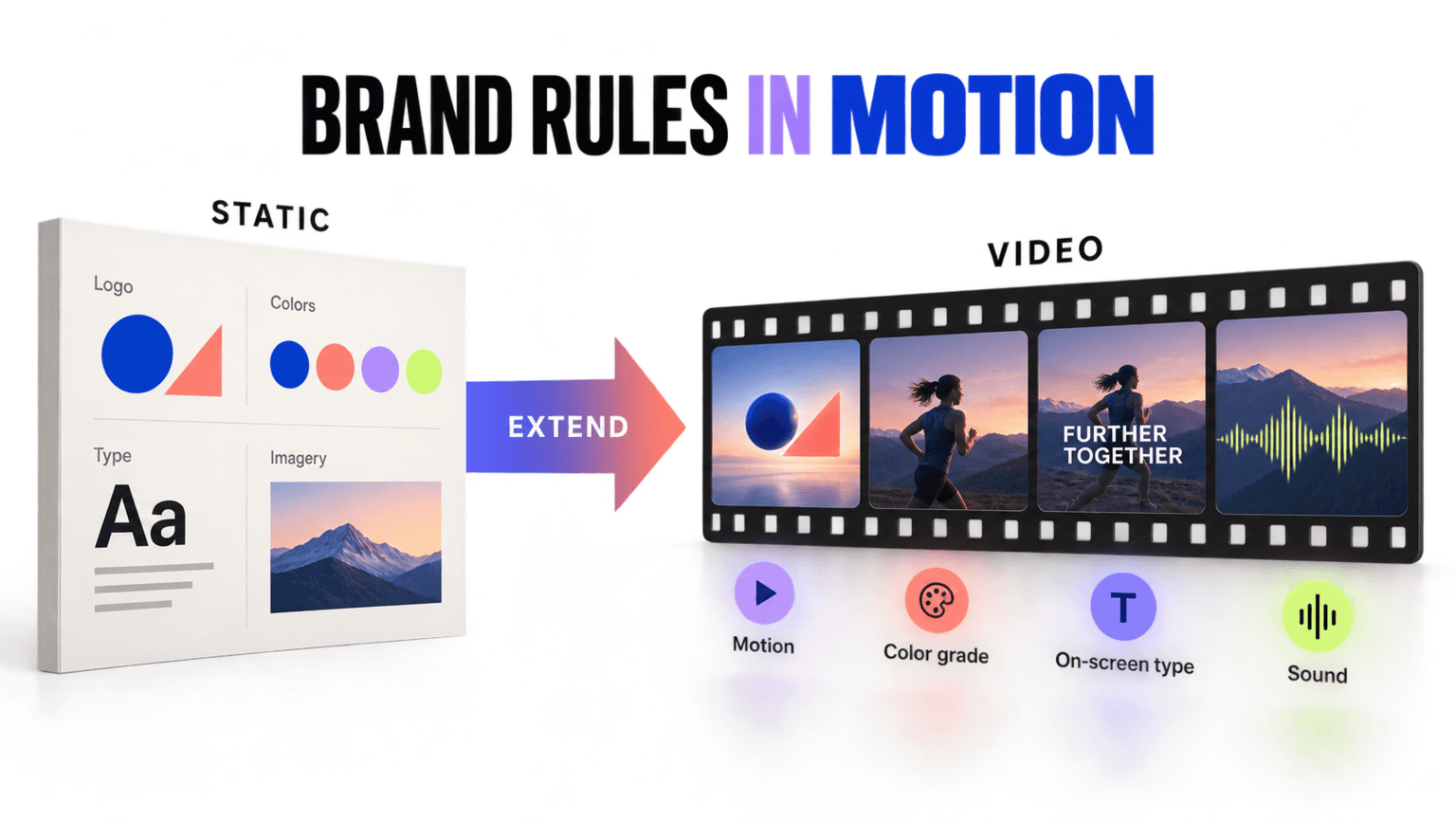
Many brand guideline resources focus primarily on static brand elements such as logos, colors, typography, photography, print materials, and web design. Video may get a few basic rules, but it often requires a much more detailed set of consistency standards.
A brand's visual identity in video involves decisions that static guidelines don't fully cover: how the logo animates in and out, how footage should be color-graded across different lighting conditions and creators, how on-screen text should be styled and timed, and whether specific audio or sonic branding should be used consistently.
This becomes an operational challenge at scale, not just a design consideration. A brand producing dozens of video ads each month across multiple creators, editors, or agencies needs those brand rules to remain consistent across footage that may never be reviewed frame by frame before it goes live. Static brand guidelines don't automatically translate into a video production workflow; teams need practical systems for applying and checking those rules throughout production.
This is where tagging and organizing a video library by brand-relevant attributes can become a practical extension of brand guidelines. When footage is consistently tagged by product, campaign, creator, or other relevant attributes, teams can find and review the right content more easily and audit video libraries at scale. Instead of relying entirely on individual editors to remember brand rules, teams have a more structured way to organize and manage the footage those rules apply to.
Brand Guidelines Tips and Best Practices
Good brand guidelines need to be useful in practice, not just comprehensive on paper. A few principles can make them easier for teams to adopt, reference, and maintain over time.
Start with the essentials. Begin with logo, color, and typography before expanding into more detailed rules around imagery, tone, or video. A guide that tries to cover everything at once, before the core essentials are established, can overwhelm the people it's meant to help.
Make it accessible. Host guidelines somewhere every team can easily find and reference them rather than burying them several folders deep as a static PDF. Accessibility can make the difference between guidelines that get used and guidelines that get forgotten.
Build in flexibility. Allow deliberate creative flexibility so guidelines support campaign-specific work without making every execution look identical. Strong brand systems give teams room to create within a recognizable framework rather than forcing every piece of content into the same template.
FAQs
What Should Be Included in a Brand Style Guide?
At minimum, a brand style guide should cover logo usage and misuse examples, the approved color palette with relevant color values, typography and hierarchy, imagery or photography style, and tone of voice guidance. Larger or video-heavy brands may also need motion and video-specific rules covering elements such as animation, on-screen text, transitions, and audio.
How Long Should a Brand Guidelines Document Be?
There's no fixed length that works for every brand. What matters more than page count is usability: a shorter, clearer guide that people actually reference is more useful than a long, exhaustive document that goes unread. The length will depend on the complexity of the brand and how many teams, markets, channels, or external partners need to use the guidelines.
Who Is Responsible for Maintaining Brand Guidelines?
This typically falls to a brand or marketing team, with one person or team responsible for keeping the guidelines current as the brand evolves. Having a clear owner makes it easier to update the guidelines when visual elements, products, markets, or other brand requirements change.
How Often Should Brand Guidelines Be Updated?
Brand guidelines should be updated whenever a material part of the brand changes, such as a visual refresh, new product line, or expansion into a new market. An annual review can also help confirm that the guidelines still reflect how the brand is being used, even when there have been no major changes.
What's the Difference Between a Brand Guide and a Style Guide?
The terms are often used interchangeably, but "brand guide" can refer to a broader document covering elements such as brand identity, positioning, mission, and tone alongside visual rules. A "style guide" may focus more narrowly on visual and formatting details such as colors, fonts, imagery, and logo usage. In practice, many companies combine both into a single set of brand guidelines.