Media and entertainment teams produce massive volumes of video every day, from films and TV shows to live broadcasts, sports coverage, and social content. Cloud drives and DAMs designed primarily for finished marketing assets may not provide the clip-level search, technical metadata, proxy workflows, and production integrations required by video-heavy teams. A specialized Media & Entertainment DAM solves this by treating video as a first-class asset, using AI-powered transcripts, scene detection, proxy workflows, and advanced metadata to make every clip searchable. In this guide, you'll learn why M&E organizations need a video-first DAM, the essential features to look for, common use cases, and how to choose the right platform for your production workflows.
TL;DR
Massive volume, tight deadlines: M&E teams handle huge libraries of raw footage. Specialized DAM tools add video-centric indexing (transcripts, AI tags) to avoid the chaos of shared drives.
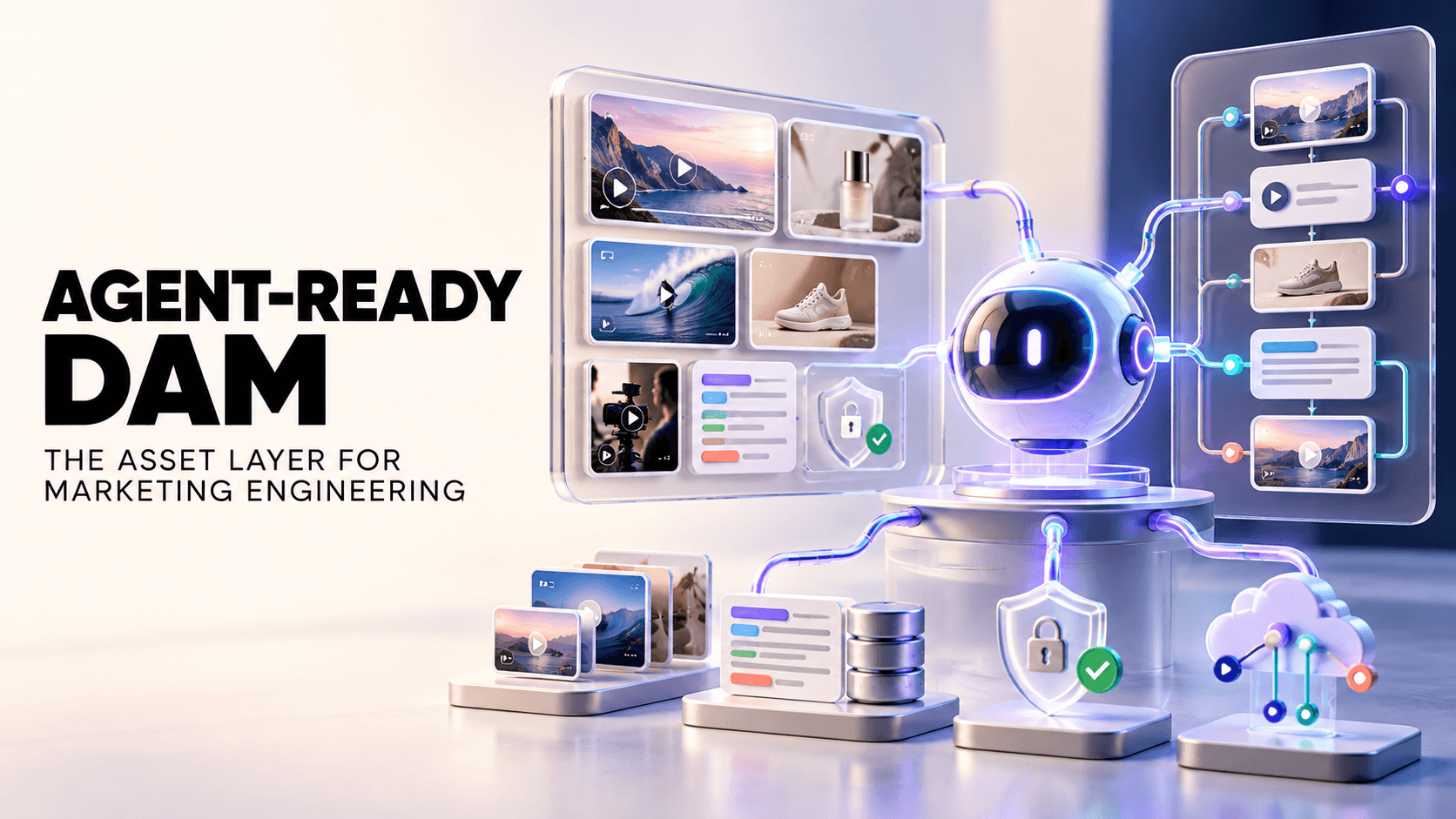
Video-specific features: Key capabilities include proxy workflows for editing, AI-driven metadata (speech-to-text, scene/object detection) for deep search, and support for broadcast formats.
Global distribution: High-speed delivery via CDN linking and on-brand portals is essential to meet multi-platform release schedules.
Security & control: Robust role-based permissions, watermarking, and audit logs keep unreleased or licensed content safe.
Rights and compliance: The system tracks licenses and expirations so clips automatically flag or expire when usage rights end.
The growing challenge of content management in Media & Entertainment
Media companies face unprecedented content growth. Depending on the number of cameras, recording formats, and resolution, a single production day can generate a large volume of footage that must be transferred, reviewed, organized, and preserved. Streaming platforms, social channels, connected devices, and always-on production schedules have increased both the volume of media being created and the number of formats teams must manage.
In practice, a single event often generates thousands of raw clips. A single live event can generate hundreds or thousands of clips when footage from multiple cameras, interviews, backstage coverage, alternate angles, and social teams is combined. Teams under tight deadlines must cull this raw media almost in real time.
Compounding the volume issue is fragmentation and urgency. Files may live on local drives, editing stations, cloud folders, and social platforms, leading to version confusion and lost content. When footage is spread across local drives, editing systems, cloud folders, and individual devices, teams spend more time locating files, checking versions, and requesting access. Centralizing assets in a searchable system reduces this operational friction.
At HexClad, finding one specific shot could take up to 30 minutes. After organizing its footage in Recharm, the same search took five minutes or less; an 83% reduction. Briefing and footage sourcing also dropped from 30 minutes to 10 minutes, helping editors produce three times more ad edits.
With marketing teams pushing social cutdowns and VFX artists needing access to dailies, any delay is costly. In short, basic file shares cannot scale to manage fast-moving, broadcast-quality media. M&E companies need a centralized library that keeps up with their pace, volume, and complexity.
Why Is a Specialized DAM Essential for M&E Companies?
Media and entertainment teams work with massive video files, complex production workflows, and tight publishing deadlines. A video-focused DAM supports large media files, searchable footage, proxy-based review, technical metadata, controlled sharing, and connections to editing or distribution workflows.
DAM vs. MAM: What’s the Difference?
DAM and MAM platforms overlap, but they are not always interchangeable. A DAM primarily helps teams organize, search, manage, share, and reuse digital assets. A MAM generally supports deeper media-production operations, such as ingest, transcoding, workflow orchestration, broadcast integrations, and delivery.
Some modern platforms combine capabilities from both categories. The right choice depends on whether the organization primarily needs a searchable content library or a system that manages active broadcast and post-production workflows.
Key Features of a DAM for M&E
A DAM for media and entertainment needs far more than file storage. Here are the capabilities that make a real difference.
Advanced Video Storage & Proxy Management
Large video files can slow production. A media DAM supports broadcast formats like MXF, ProRes, and RED while automatically generating lightweight proxy files for editing and review. Teams can preview, search, and collaborate without downloading massive source files, keeping production moving quickly.
AI-Powered Metadata & Video Search
AI automatically tags videos with transcripts, people, objects, locations, and scenes, making every second of footage searchable. Instead of browsing folders manually, editors can search for spoken dialogue, specific people, or visual elements and instantly locate the right clip for reuse.
CDN-Based Content Distribution
Media teams often need to deliver content globally within minutes. DAM platforms integrated with CDNs distribute video quickly across broadcast, OTT, social media, and partner networks, ensuring fast, reliable access regardless of location.
Branded Portals
Branded portals let teams securely share approved assets with agencies, journalists, partners, and distributors. Instead of sending files manually, organizations create branded libraries with custom permissions while keeping full control over access.
Security & Access Controls
High-value media requires strong protection. Enterprise DAMs provide role-based permissions, encrypted transfers, watermarking, expiring links, and complete audit trails to protect unreleased content and licensed assets.
Rights Management & Expiry Workflows
Licensing information is stored alongside every asset, including usage rights, territories, and expiry dates. Automated alerts and workflows prevent expired or restricted content from being published, reducing legal and compliance risks.
DAM for M&E use cases/examples
Media organizations use DAM platforms throughout the content lifecycle, from production to distribution and long-term archiving.
Broadcast Archives
Studios and broadcasters use DAMs to organize decades of footage into searchable libraries. AI-powered indexing makes it easy to locate historical clips, sports highlights, or news footage within seconds instead of hours.
Social Media & Marketing Content
Marketing teams repurpose long-form content into short clips for social media, advertising, and promotional campaigns. With searchable video libraries, approved footage can be found, edited, and published much faster without recreating content.
How to Choose the Right DAM for Media & Entertainment
Not every DAM is built for production workflows. Before choosing a platform, test it with your real media files and evaluate how well it supports editing, search, distribution, and security.
Test with Real Production Files
Upload your actual camera formats (such as MXF, ProRes, or R3D) to verify that the platform ingests them correctly, creates proxy files quickly, and preserves original-quality masters. Also test whether AI accurately tags scenes, objects, and spoken dialogue.
Evaluate Distribution & Collaboration
A good M&E DAM should make it easy to deliver content worldwide. Look for CDN integrations, branded portals for external partners, and simple, secure sharing for broadcasters, agencies, and clients.
Check Security & Rights Management
Review permissions, audit logs, watermarking, expiring links, and rights management features. The platform should help protect unreleased content while ensuring licensed assets are used only within approved terms.
Choose a DAM that's proven for media production—not just general marketing assets. Running a pilot with your real workflows is the best way to evaluate performance before making a decision.
FAQs
What makes a media & entertainment DAM different from a standard DAM?
A media & entertainment DAM is built for video-first workflows. It indexes clips using AI, generates transcripts, supports proxy playback, and lets teams search inside videos. Standard DAMs mainly manage images, documents, and finished marketing assets.
Can a DAM handle broadcast-quality video formats?
Yes, if it's designed for media workflows. Modern M&E DAMs support formats like MXF, ProRes, and RED while automatically generating proxy files for faster review and editing.
How does rights management work in a media DAM?
Each asset stores licensing information such as usage dates, territories, and approved channels. The DAM can notify users when rights expire or automatically restrict access to prevent unlicensed use.
What security features should a media DAM include?
Look for role-based permissions, watermarking, expiring share links, encryption, and detailed audit logs. These features help protect unreleased content and control access across internal and external teams.
Can Recharm search inside raw, unedited footage?
Yes. Recharm uses AI to transcribe speech, detect visual elements, and index footage at the clip level. Teams can search by spoken words, objects, or scenes to find specific moments without manually reviewing hours of video.