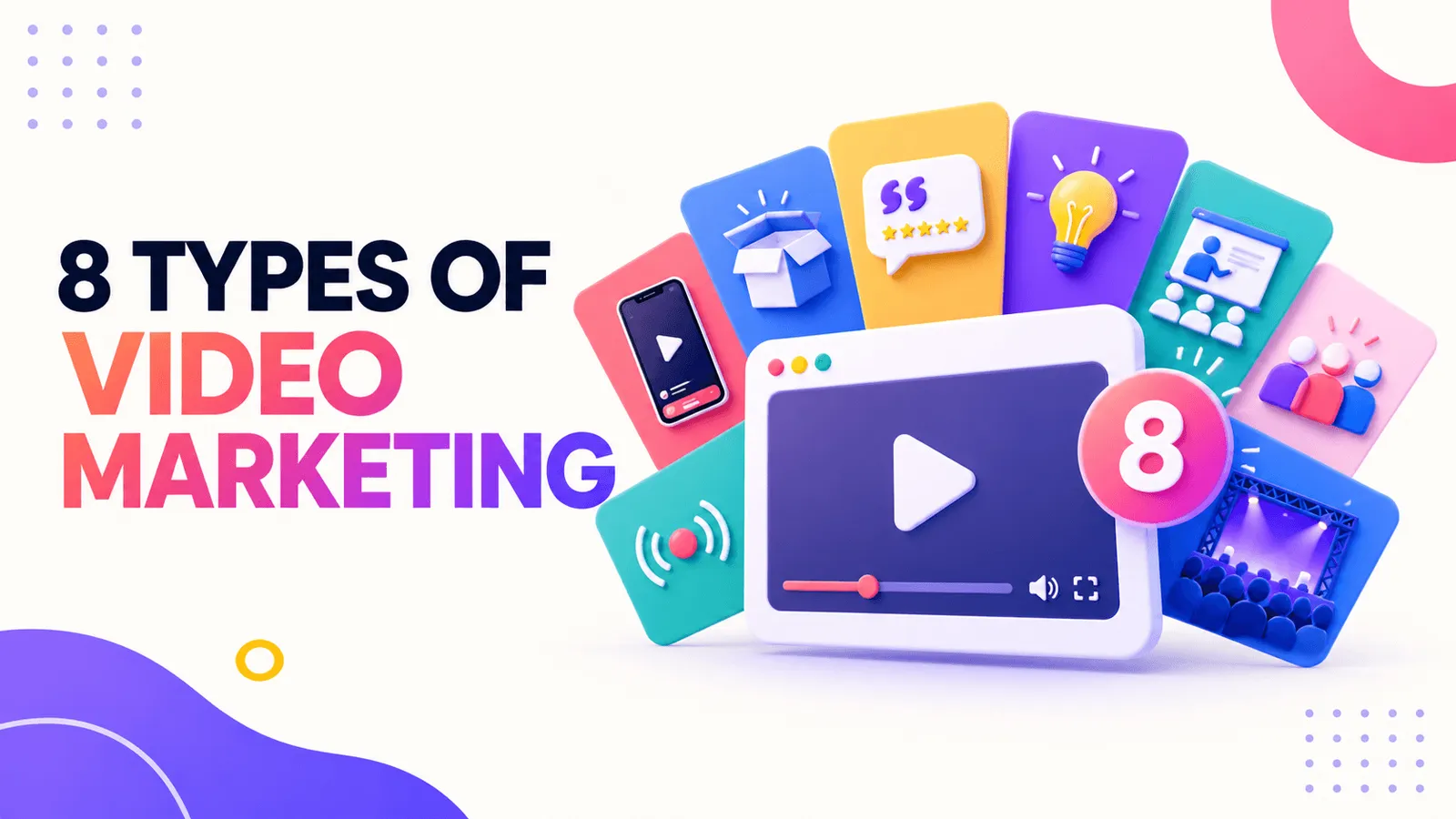
Video marketing includes a wide range of formats, from short social clips and product demos to webinars, livestreams, and testimonials. Each format serves a different purpose, so choosing the right one depends on your goal, audience, and stage of the buyer journey.
This guide breaks down the video marketing formats worth testing, grouped by what they are best suited for across awareness, consideration, and conversion.
TL;DR
-
Video marketing covers a wide range of formats, with different types suited to awareness, consideration, and conversion.
-
The most useful formats are those with proven, measurable use across real campaigns, not simply the ones that look impressive.
-
A strong marketing video starts with one clear goal and core message. Production quality matters, but clarity matters more.
-
Brands can scale video output by treating existing footage as a reusable content library instead of creating new content for every format.
How We Selected These Formats
This list is based on patterns observed across brands running video marketing campaigns on Recharm, with a focus on which formats and clip types are actually used, tested, and reused across campaigns.
Each format was evaluated based on three criteria:
-
Production feasibility: Can a typical in-house team realistically produce it?
-
Funnel fit: Does it serve a clear stage of the buyer journey?
-
Engagement data: Is there supporting data from published industry sources?
Formats are grouped by their primary purpose, awareness, consideration, or conversion, rather than by production complexity. A 15-second social clip and a full product demo may look very different to produce, but both can serve the same stage of the funnel.
What is video marketing?
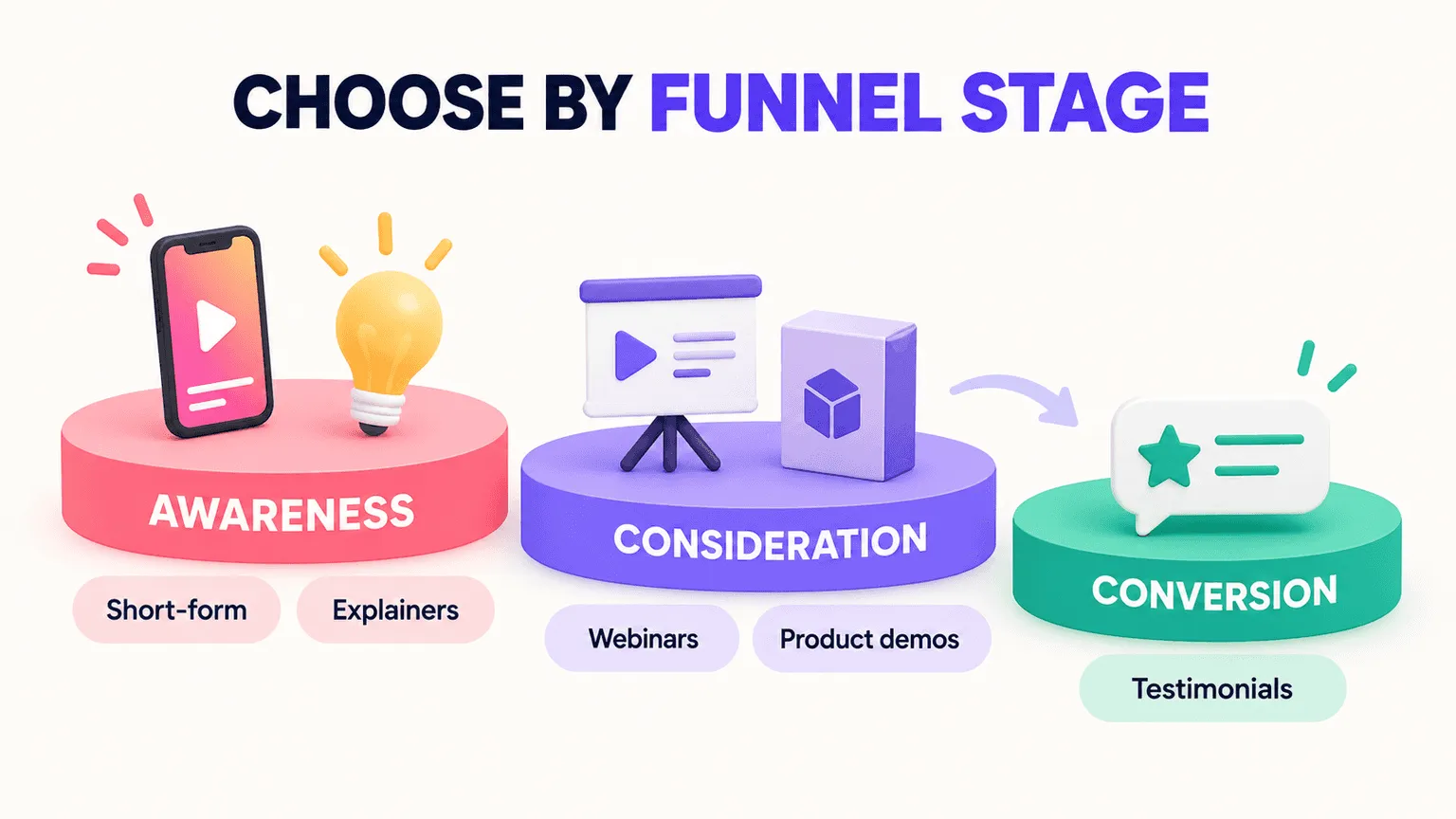
Video marketing is the use of video content across channels such as websites, social media, email, and paid ads to inform, engage, or convert an audience.
Video can support nearly every stage of the funnel. A short hook can build awareness, a product demo can answer consideration-stage questions, and a testimonial can help move a hesitant buyer toward conversion.
The key is choosing a format that matches the goal and stage of the buyer journey.
Why video marketing matters
Video can support marketing in several ways, from capturing attention and increasing engagement to helping visitors better understand a product or topic. Its impact can vary depending on the format, platform, audience, and how the video is used.
Engagement Lift
Video can help brands capture attention and keep audiences engaged across channels. Its impact varies by format, platform, and audience, so the right format matters as much as the content itself.
SEO Signal
Video can also support organic visibility. Pages with relevant video content can give visitors more ways to engage with a page and understand a product or topic.
For example, a product page with an embedded demo video can help visitors understand the product without leaving the page to look for more information.
How to Make an Effective Marketing Video?
Creating an effective marketing video isn't just about having a big production budget or expensive equipment. The strongest videos usually get three fundamentals right: a clear goal, a defined audience, and one focused message.
Production fundamentals
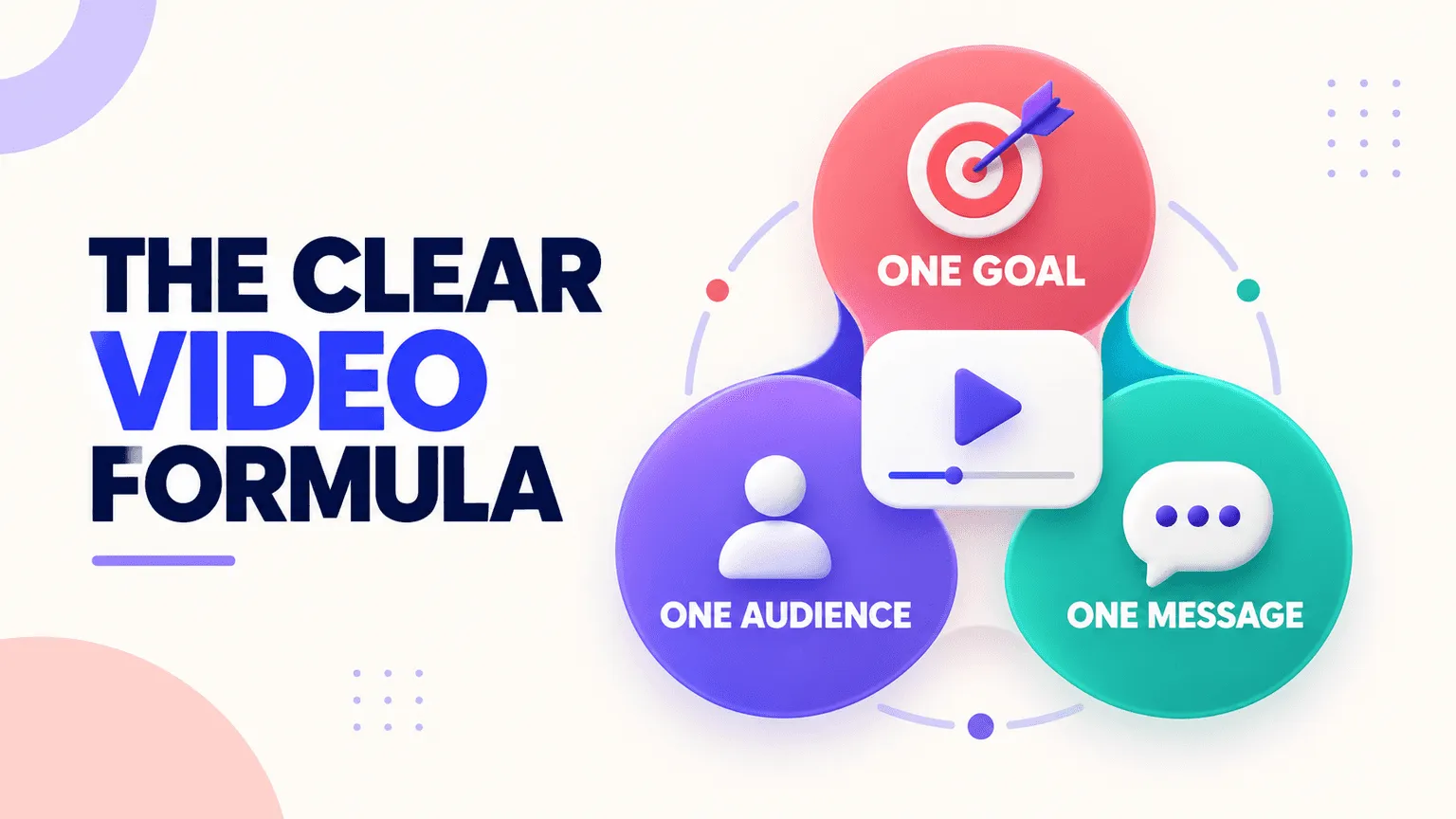
Start with a clear goal. Decide what the video needs to accomplish, whether that's generating awareness, explaining a product, building trust, or driving a purchase. Then define exactly who you're speaking to. A video written for everyone often ends up resonating with no one.
Finally, build the script around one core message. Trying to communicate several ideas in a short video usually makes each one weaker. The viewer should understand what the video is about and why it matters without having to work for it.
Cross-industry lessons
Across brands in supplements, cookware, subscription boxes, and DTC apparel, the same pattern appears: the videos that perform aren't necessarily the most polished ones. They're the ones with the clearest message.
A beautifully produced video can still underperform if viewers don't understand what it's selling or why they should care. A simpler video with a strong hook and an unmistakable message can be much more effective.
Common mistakes to avoid
One of the biggest mistakes is hiding the core message past the first few seconds. Viewers decide quickly whether a video is worth watching, so the value proposition needs to appear early.
Other common mistakes include designing primarily for desktop when much of your audience watches on mobile, and treating every video as a one-off piece of content. When planning a video, think about how it could later be cut into shorter clips, ads, social posts, or other formats.
8 Types of Video Marketing to Add to Your Content Mix
A strong video strategy usually includes more than one format. Different types of videos serve different purposes, from introducing a problem to demonstrating a product and building trust before purchase.
1. Explainer Videos
What it is:
An explainer video breaks down what a product, service, or concept does and why it matters. These videos are usually short and focused on making something unfamiliar easier to understand.
When to use it:
Explainer videos work especially well at the top of the funnel, when your audience understands that they have a problem but may not yet understand the solution. They're also useful when the product itself is new, technical, or difficult to explain through static content.
Production tip:
Start with the problem the viewer already recognizes rather than opening with a list of product features. For example, instead of immediately introducing the product, show the frustrating situation it is designed to solve. Once the viewer recognizes the problem, the product becomes much easier to understand.
2. Product Demo Videos
What it is:
A product demo shows the product in action. Rather than simply telling viewers what the product does, it lets them see how it works and how it solves a specific problem.
When to use it:
Product demos are particularly useful during the consideration stage, when potential customers already understand the category but need more evidence before choosing your product.
Production tip:
Focus on showing the solution rather than making claims about it. If a product saves time, show the process becoming faster. If it solves a particular problem, demonstrate that problem and the product's response to it. A viewer should be able to understand the product's value by watching it work.
3. Testimonial Videos
What it is:
A testimonial video features a real customer talking about their experience with a product or service in their own words. Unlike a brand-written review or scripted advertisement, the value comes from hearing the experience directly from another customer.
When to use it:
Testimonials are most useful from the consideration stage through conversion, especially when trust is a major barrier to purchase. They can be particularly effective for products that require more research or have a higher price point.
Production tip:
Prioritize specific outcomes over generic praise. "I love this product" doesn't tell a potential customer much. A statement such as "It cut my morning routine down by 15 minutes" gives the viewer a concrete reason to believe the product is useful.
4. Short-Form Social Videos
What it is:
Short-form social videos are vertical, fast-paced videos designed specifically for platforms such as TikTok, Instagram Reels, and YouTube Shorts. They are usually under 60 seconds and are built around quick consumption and strong hooks.
When to use it:
These videos are useful for top-of-funnel reach and high-volume creative testing. Because they're relatively quick to produce, brands can test different hooks, messages, products, and creative styles before investing more heavily in a particular concept.
Production tip:
The first one or two seconds matter most. Start with a visual, statement, question, or situation that immediately gives viewers a reason to keep watching. Avoid long introductions, logos, or context-setting before getting to the point.
5. Webinars
What it is:
A webinar is a longer-form live or recorded video, typically 30 to 60 minutes, that explores a specific topic in depth. It can take the form of a presentation, educational session, panel, workshop, or expert discussion.
When to use it:
Webinars are particularly valuable in the middle of the funnel, especially for B2B products, technical solutions, and complex purchases where customers need more education before making a decision.
Production tip:
Build the webinar around a problem the audience actively wants to solve, rather than turning the entire session into a product pitch. Educational content, practical examples, and expert insights give viewers a reason to stay. A webinar that feels like a 60-minute sales presentation is likely to lose attention quickly.
6. Brand and Culture Videos
What it is:
Brand and culture videos tell the story behind a company. They can showcase brand values, the people behind the business, company culture, manufacturing processes, or behind-the-scenes moments rather than focusing on one specific product.
When to use it:
These videos are useful for brand building, recruitment, partnerships, and trust-building. They're especially valuable when customers care about the company behind the product as much as the product itself.
Production tip:
Focus on authenticity rather than excessive polish. Real employees, genuine customer stories, and behind-the-scenes footage can make the brand feel more relatable. A video that feels overly scripted or corporate can undermine the authenticity that this format is supposed to create.
7. Event Videos
What it is:
An event video captures the energy and key moments from a conference, product launch, trade show, brand activation, or other in-person event. It can be a short highlight reel or a collection of clips designed for different channels.
When to use it:
Event videos are especially useful after an event, helping brands extend the value of a moment that would otherwise disappear once the event ends. A single event can generate content for social media, email campaigns, landing pages, and future promotional material.
Production tip:
Capture more raw footage than you think you'll need. Get wide shots, close-ups, speaker clips, audience reactions, product footage, interviews, and behind-the-scenes moments. Event content is particularly easy to repurpose into shorter clips, making it one of the best formats for building a larger content library from a single production.
8. Live Video
What it is:
Live video is real-time, largely unedited content streamed directly to an audience. It can include product launches, Q&As, interviews, behind-the-scenes sessions, live demonstrations, or limited-time announcements.
When to use it:
Live video works well when you want to create direct audience interaction and a sense of immediacy. It's especially useful for product launches, Q&As, special announcements, limited drops, and other moments where being there in real time adds value.
Production tip:
Have a clear structure, but don't over-script the experience. Prepare the key points, questions, and transitions you need, while leaving room for natural interaction. The appeal of live video comes partly from its immediacy and unpredictability. If every moment feels rehearsed, it can lose the authenticity that makes the format engaging.
How Brands Use Recharm to Scale Video Marketing
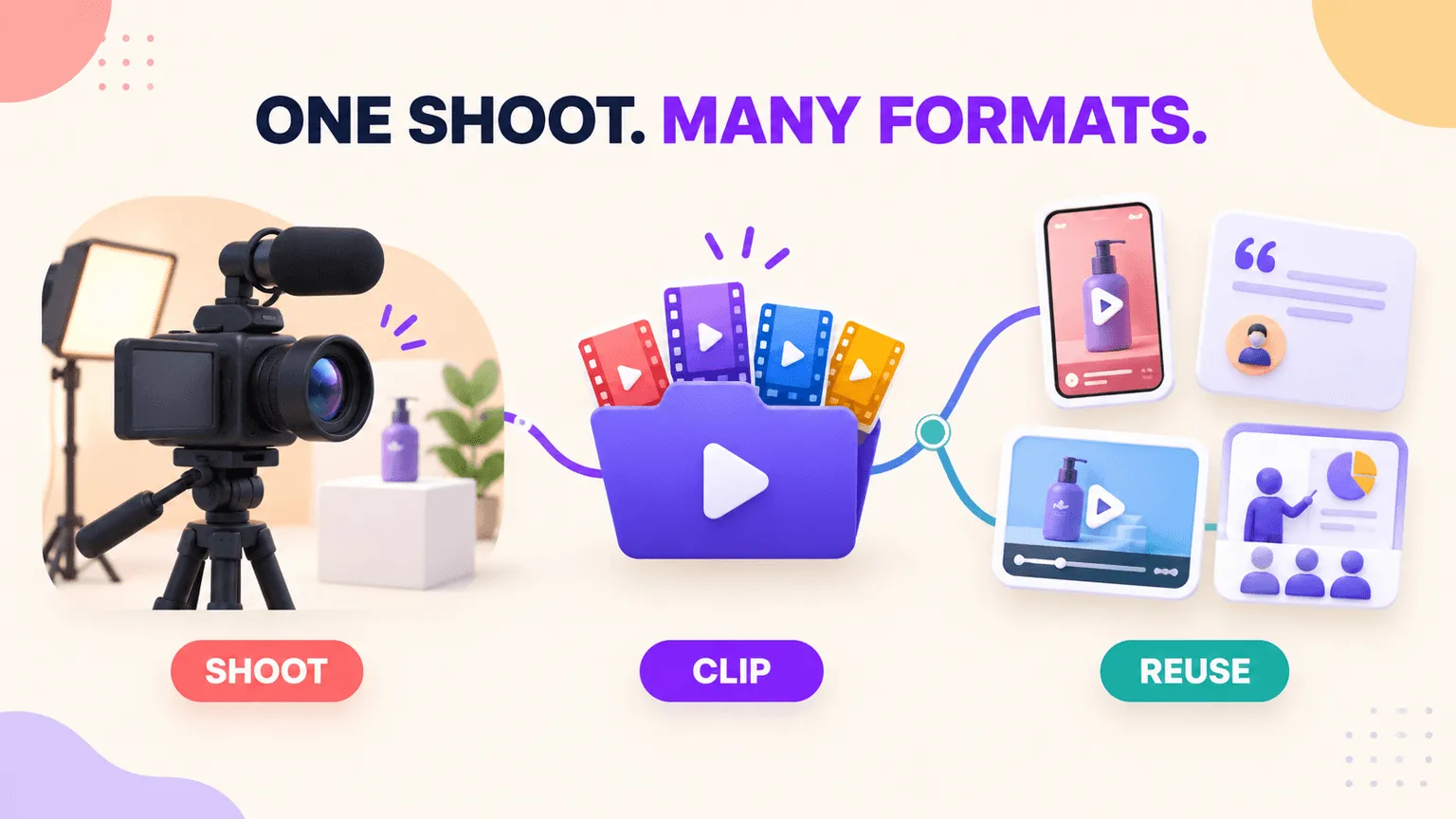
The challenge with using multiple video formats isn't producing one video. It's producing enough variations to keep testing without having to shoot new footage every time.
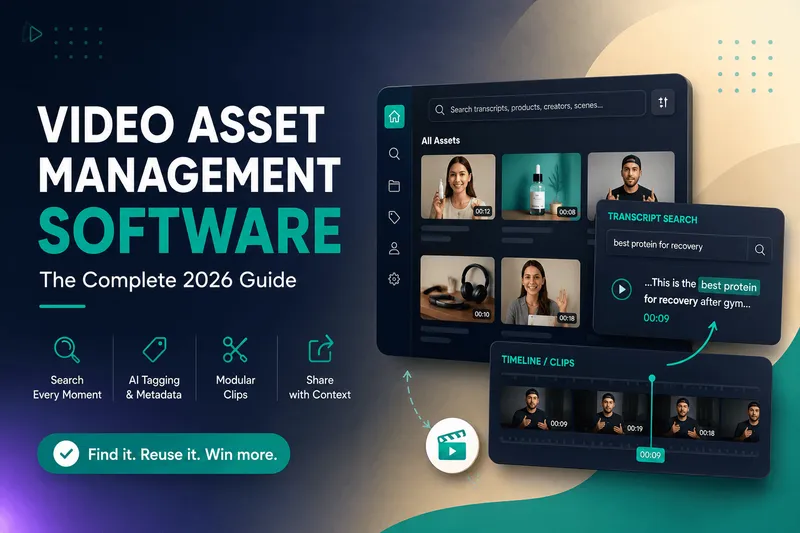
Recharm helps teams turn existing footage into a modular, AI-tagged video library instead of leaving finished videos and raw footage buried in folders. A single product shoot can be broken down into searchable clips such as hooks, testimonials, product close-ups, and B-roll. Those clips can then be reused across different campaigns and formats.
That means the same footage can support an explainer, a short-form social video, a product demo, or a testimonial cut without requiring a new shoot for every variation. Teams can search for the exact footage they need and quickly build new edits from assets they've already produced.
The impact is measurable. HexClad's team produces 3x more ad edits in the same amount of time, while Recharm's AI visual search helps cut briefing time in half. FabFitFun, meanwhile, scaled from 100 to 400 videos per quarter after organizing its footage library with Recharm.
This becomes especially valuable when teams are producing several formats at once. A webinar recording can become short-form social clips. A product shoot can generate demos and ads. A customer interview can become testimonial clips. When footage is tagged, searchable, and reusable, one production can create many more pieces of content.
Start a free trial of Recharm and see how much more video you can produce from the footage you already have.
FAQs
What type of video marketing gets the best ROI?
There isn't one format that delivers the best ROI for every brand. It depends on the funnel stage, audience, and goal. Short-form social videos can be highly efficient for awareness because they're relatively inexpensive to produce and easy to test. Product demos and testimonials can be more valuable later in the funnel, where the goal is to demonstrate value and build trust.
How many types of video marketing should a brand start with?
Start with two or three formats that address your biggest funnel gaps rather than trying to produce everything at once. A simple starting mix could be short-form social videos for awareness, a product demo or explainer for consideration, and testimonials for conversion.
What is the difference between a promo video and an explainer video?
A promo video is designed to generate excitement around a product, launch, offer, or campaign. It usually relies on strong visuals, energy, and a clear call to action. An explainer video is focused on understanding. It explains what a product or service does, how it works, and why the viewer should care. In simple terms, promo videos sell the moment, while explainer videos sell the concept.
How long should a marketing video be?
The right length depends on the format and platform. Short-form social videos generally work best when they get to the point quickly, often within 60 seconds. Explainer videos can usually communicate their core message in under two minutes, while product demos should run only as long as needed to show the product solving the problem. Longer formats such as webinars can run 30 to 60 minutes when the content requires deeper education.
Which video format works best for social media?
For most social platforms, short-form vertical video is the strongest starting point. Videos built specifically for TikTok, Instagram Reels, and YouTube Shorts are better suited to mobile viewing than simply uploading a horizontal video designed for another channel. Product demos and testimonials can also work well when cut into short, focused clips that communicate one benefit or proof point quickly.