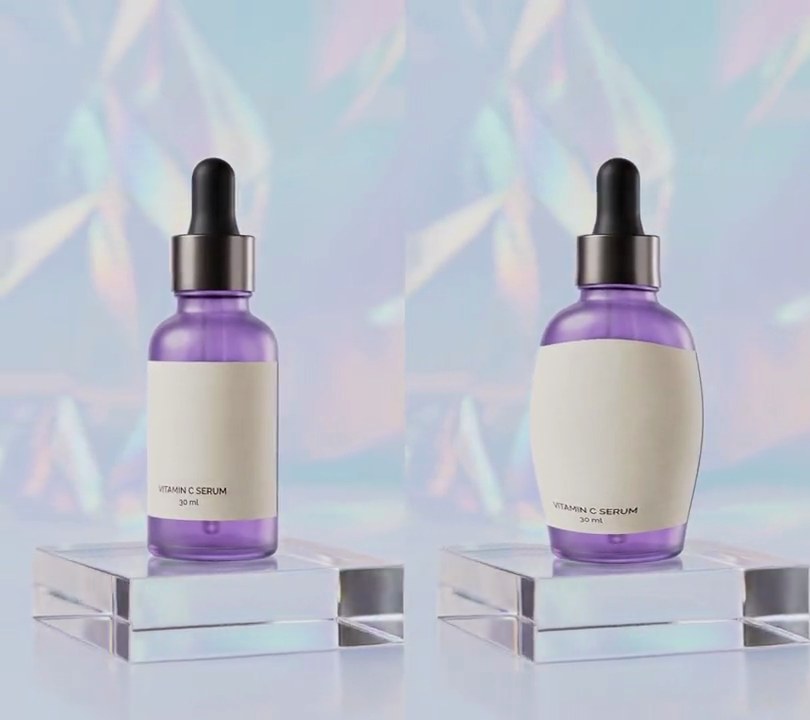
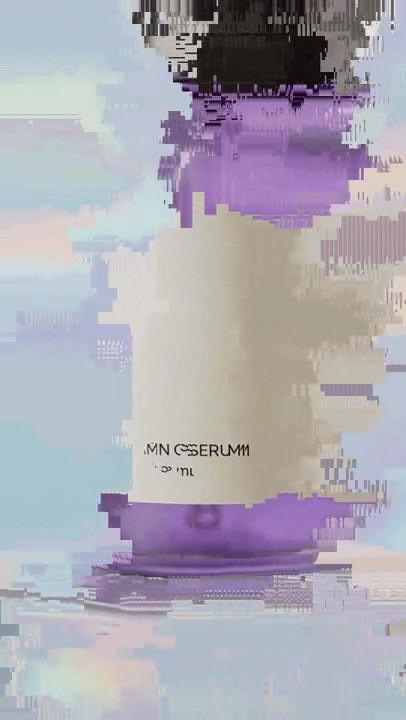
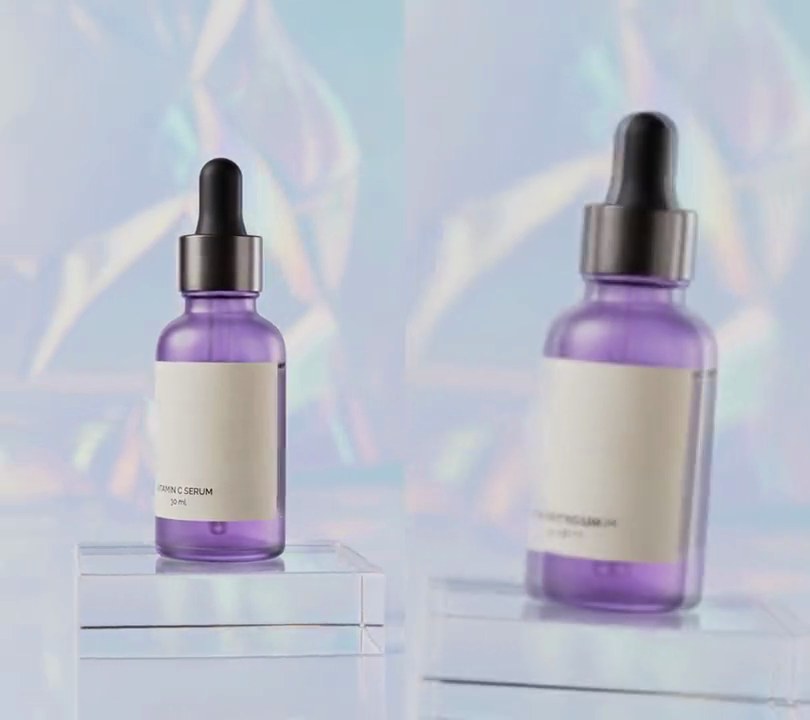
Get this effect
Switch to Code in your Claude Desktop App
Install the skill (once)
Show the prompt
Install the Recharm video effects skill: download https://recharm-growth-staging.s3.us-east-2.amazonaws.com/website/downloads/recharm-video-effects.zip and unzip it into ~/.claude/skillsAsk for the effect
Add a black hole to input.mp4
Second the pull begins: 3.0
Seconds until the picture has vanished into the center: 2.0

Several videos, several effects, one ask
Put your clips in the folder, mention them with @, and ask for everything at once. Claude runs one tested script after another on each clip, then joins them.
Add a black hole to @clip1.mp4, put a sale badge on @clip2.mp4, give @clip3.mp4 a VHS look, then join all three with crossfades.
Settings you can change
Ask Claude to change any of these, or edit them at the top of the script.
| Setting | Default | What it does |
|---|---|---|
START | 3.0 | Second the pull begins. |
LENGTH | 2.0 | Seconds until the picture has vanished into the center. |
PINCH | 3.0 | How hard the middle is squeezed by the end; 0 just shrinks the picture. |
Without the skill
Don’t want to install the skill? Paste this prompt into Claude Code and Claude writes the script itself.
Show the prompt
Add a black hole effect to input.mp4 with Python, numpy and ffmpeg: from 3.0 to 5.0 seconds, pull the whole picture into the center of the frame until it vanishes. For each output pixel, take its distance r from the frame center; the picture fills a disc of radius R*(1-p), where R is half the frame's diagonal and p = ((t-3)/2)^2 runs 0 to 1 (so the pull speeds up). Inside the disc, with u = r/(R*(1-p)), sample the input at the same angle and distance R*u^(1/(1+3p)), with bilinear filtering, which squeezes the middle and makes the edges bow inward; anything outside the disc or sampled from outside the frame is black (0, 0, 0). Leave the video untouched before 3.0 seconds and fully black after 5.0. Keep the size, frame rate, length and audio, and save it as output.mp4.Run it without Claude
This is the exact script we tested. Save it as black-hole.py and run:
python3 black-hole.py input.mp4 output.mp4Show the script
#!/usr/bin/env python3
"""Black hole: the picture bows inward and is sucked into the center of the frame until nothing is left.

Usage: python3 black-hole.py input.mp4 output.mp4
Needs ffmpeg and numpy (pip install numpy).
"""
import json
import subprocess
import sys

import numpy as np

START = 3.0     # second the pull begins
LENGTH = 2.0    # seconds until the picture has vanished into the center
PINCH = 3.0     # how hard the middle is squeezed by the end (0 = the picture just shrinks)


def pull(img, p):
    """Shrink the picture into a disc whose radius falls from the frame's half-diagonal to 0 as p goes 0 -> 1,
    squeezing the middle harder than the rim so the edges bow inward. Outside the disc is black."""
    radius = half_diagonal * (1 - p)
    u = np.minimum(dist / max(radius, 1e-6), 1)
    src_r = half_diagonal * u ** (1 / (1 + PINCH * p))
    sx = w / 2 + dx / np.maximum(dist, 1e-6) * src_r - 0.5
    sy = h / 2 + dy / np.maximum(dist, 1e-6) * src_r - 0.5
    inside = (dist < radius) & (sx >= 0) & (sx <= w - 1) & (sy >= 0) & (sy <= h - 1)
    x0 = np.clip(np.floor(sx).astype(int), 0, w - 2)
    y0 = np.clip(np.floor(sy).astype(int), 0, h - 2)
    fx, fy = (sx - x0)[..., None], (sy - y0)[..., None]
    top = img[y0, x0] * (1 - fx) + img[y0, x0 + 1] * fx
    bottom = img[y0 + 1, x0] * (1 - fx) + img[y0 + 1, x0 + 1] * fx
    return ((top * (1 - fy) + bottom * fy) * inside[..., None]).astype(np.uint8)


def probe(path):
    info = json.loads(subprocess.check_output(["ffprobe", "-v", "error", "-select_streams", "v:0", "-show_entries",
                                               "stream=width,height,r_frame_rate", "-of", "json", path]))
    s = info["streams"][0]
    num, den = s["r_frame_rate"].split("/")
    return s["width"], s["height"], s["r_frame_rate"], float(num) / float(den)


src, out = sys.argv[1:3]
w, h, rate, fps = probe(src)
ys, xs = np.mgrid[0:h, 0:w].astype(np.float32)
dx, dy = xs + 0.5 - w / 2, ys + 0.5 - h / 2
dist = np.hypot(dx, dy)
half_diagonal = float(np.hypot(w, h)) / 2

reader = subprocess.Popen(["ffmpeg", "-v", "error", "-i", src, "-f", "rawvideo", "-pix_fmt", "rgb24", "-"],
                          stdout=subprocess.PIPE)
writer = subprocess.Popen(["ffmpeg", "-y", "-v", "error", "-f", "rawvideo", "-pix_fmt", "rgb24", "-s", f"{w}x{h}",
                           "-r", rate, "-i", "-", "-i", src, "-map", "0:v", "-map", "1:a?", "-c:v", "libx264",
                           "-crf", "18", "-pix_fmt", "yuv420p", "-c:a", "copy", "-shortest", out],
                          stdin=subprocess.PIPE)
i = 0
while True:
    raw = reader.stdout.read(w * h * 3)
    if len(raw) < w * h * 3:
        break
    frame = np.frombuffer(raw, np.uint8).reshape(h, w, 3)
    p = min(max((i / fps - START) / LENGTH, 0), 1) ** 2  # eases in, so the pull speeds up like falling
    if p > 0:
        frame = pull(frame.astype(np.float32), p)
    writer.stdin.write(frame.tobytes())
    i += 1
writer.stdin.close()
if reader.wait() or writer.wait():
    sys.exit("ffmpeg failed")