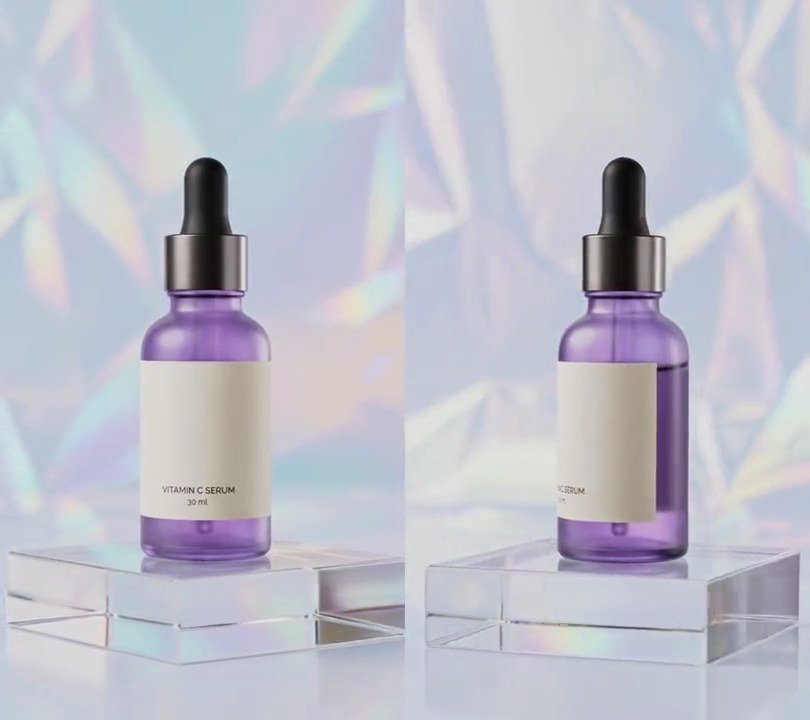
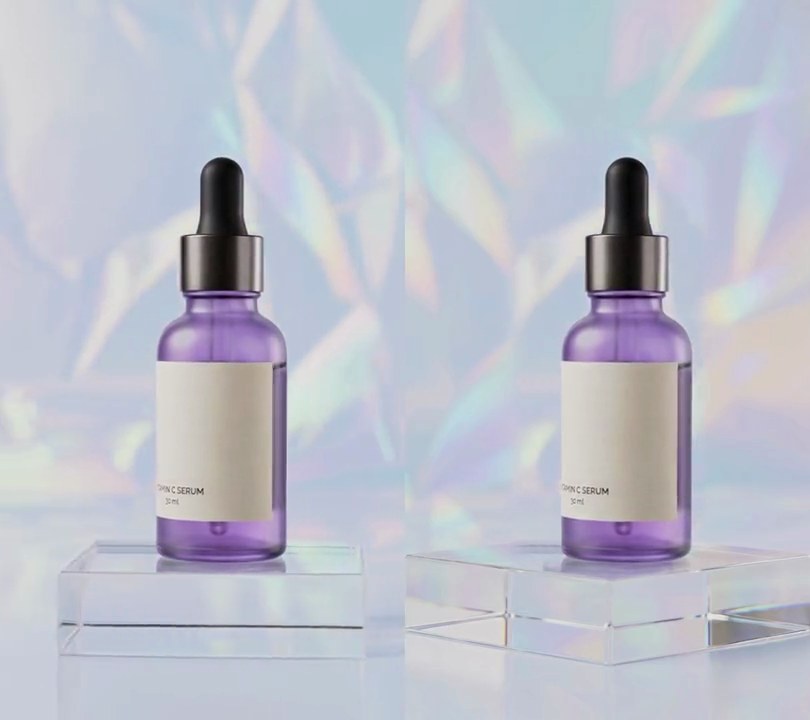
Get this effect
Switch to Code in your Claude Desktop App
Install the skill (once)
Show the prompt
Install the Recharm video effects skill: download https://recharm-growth-staging.s3.us-east-2.amazonaws.com/website/downloads/recharm-video-effects.zip and unzip it into ~/.claude/skillsAsk for the effect
Add a motion trail to input.mp4
Second the swing starts: 1.0
Seconds the swing takes, right, left and back to center: 1.6

Several videos, several effects, one ask
Put your clips in the folder, mention them with @, and ask for everything at once. Claude runs one tested script after another on each clip, then joins them.
Add a motion trail to @clip1.mp4, put a sale badge on @clip2.mp4, give @clip3.mp4 a VHS look, then join all three with crossfades.
Settings you can change
Ask Claude to change any of these, or edit them at the top of the script.
| Setting | Default | What it does |
|---|---|---|
START | 1.0 | Second the swing starts. |
MOVE | 1.6 | Seconds the swing takes, right, left and back to center. |
SWING | 0.30 | How far the picture travels each way, as a share of the frame width. |
GHOSTS | 4 | Ghost copies trailing the subject. |
GAP | 3 | Frames between one ghost and the next. More spreads the copies further apart. |
OPACITY | [0.6, 0.45, 0.3, 0.15] | Opacity of each ghost, nearest first. |
Without the skill
Don’t want to install the skill? Paste this prompt into Claude Code and Claude writes the script itself.
Show the prompt
Add a motion trail to input.mp4. From 1.0 to 2.6 seconds, slide the whole picture sideways: the shift in pixels is 0.30 × frame width × sin(2π p), where p = u²(3 − 2u) and u runs from 0 to 1 over those 1.6 seconds, so the picture swings right, then left, then back to center with eased starts and stops. Fill the edge it uncovers by mirroring the picture at that edge (no black bars). While it moves, from 1.0 seconds until 0.4 seconds after the swing ends (3.0 seconds), give it a trail of 4 ghosts: the shifted frames from 3, 6, 9 and 12 frames earlier, each mixed over the current frame at opacity 0.6, 0.45, 0.3 and 0.15 (nearest first), keeping the darker value at every pixel of the current frame and each mix, so the dark bottle leaves faint copies on the light backdrop. Before 1.0 seconds and after 3.0 seconds the video is unchanged. Use Python with numpy and ffmpeg, keep the size, frame rate and audio, and save it as output.mp4.Run it without Claude
This is the exact script we tested. Save it as motion-trail.py and run:
python3 motion-trail.py input.mp4 output.mp4Show the script
#!/usr/bin/env python3
"""Motion trail: the shot swings right, then left, and the subject leaves a line of fading ghost copies behind it.

Usage: python3 motion-trail.py input.mp4 output.mp4
Needs ffmpeg and numpy (pip install numpy).
"""
import json
import math
import subprocess
import sys

import numpy as np

START = 1.0                        # second the swing starts
MOVE = 1.6                         # seconds the swing takes (right, left, back to center)
SWING = 0.30                       # how far the picture travels each way, as a share of the frame width
GHOSTS = 4                         # ghost copies trailing the subject
GAP = 3                            # frames between one ghost and the next
OPACITY = [0.6, 0.45, 0.3, 0.15]   # opacity of each ghost, nearest first


def offset(t):
    """Sideways shift in pixels at time t: one smooth swing right, left and back to center."""
    u = min(max((t - START) / MOVE, 0), 1)
    p = u * u * (3 - 2 * u)  # ease in and out
    return round(SWING * w * math.sin(2 * math.pi * p))


def shift(img, dx):
    """Move the picture dx pixels right, mirroring the edge it uncovers so no black shows."""
    x = np.arange(w) - dx
    x = np.where(x < 0, -x, np.where(x >= w, 2 * w - 2 - x, x))
    return img[:, x]


def trail(history):
    """Lay each earlier frame over the newest at its opacity, keeping whichever is darker at every pixel,
    so a darker subject shows its past positions against a lighter background and nothing else changes."""
    cur = history[-1].astype(np.float32)
    out = cur.copy()
    for k, a in enumerate(OPACITY[:GHOSTS], start=1):
        if k * GAP < len(history):
            past = history[-1 - k * GAP].astype(np.float32)
            out = np.minimum(out, cur * (1 - a) + past * a)
    return out.astype(np.uint8)


def probe(path):
    info = json.loads(subprocess.check_output(["ffprobe", "-v", "error", "-select_streams", "v:0", "-show_entries",
                                               "stream=width,height,r_frame_rate", "-of", "json", path]))
    s = info["streams"][0]
    num, den = s["r_frame_rate"].split("/")
    return s["width"], s["height"], s["r_frame_rate"], float(num) / float(den)


src, out = sys.argv[1:3]
w, h, rate, fps = probe(src)
reader = subprocess.Popen(["ffmpeg", "-v", "error", "-i", src, "-f", "rawvideo", "-pix_fmt", "rgb24", "-"],
                          stdout=subprocess.PIPE)
writer = subprocess.Popen(["ffmpeg", "-y", "-v", "error", "-f", "rawvideo", "-pix_fmt", "rgb24", "-s", f"{w}x{h}",
                           "-r", rate, "-i", "-", "-i", src, "-map", "0:v", "-map", "1:a?", "-c:v", "libx264",
                           "-crf", "18", "-pix_fmt", "yuv420p", "-c:a", "copy", "-shortest", out],
                          stdin=subprocess.PIPE)
trail_end = START + MOVE + GHOSTS * GAP / fps  # the last ghost catches up this long after the swing stops
history, i = [], 0
while raw := reader.stdout.read(w * h * 3):
    t = i / fps
    frame = shift(np.frombuffer(raw, np.uint8).reshape(h, w, 3), offset(t))
    history = (history + [frame])[-(GHOSTS * GAP + 1):]
    writer.stdin.write((trail(history) if START <= t <= trail_end else frame).tobytes())
    i += 1
writer.stdin.close()
if reader.wait() or writer.wait():
    sys.exit("ffmpeg failed")