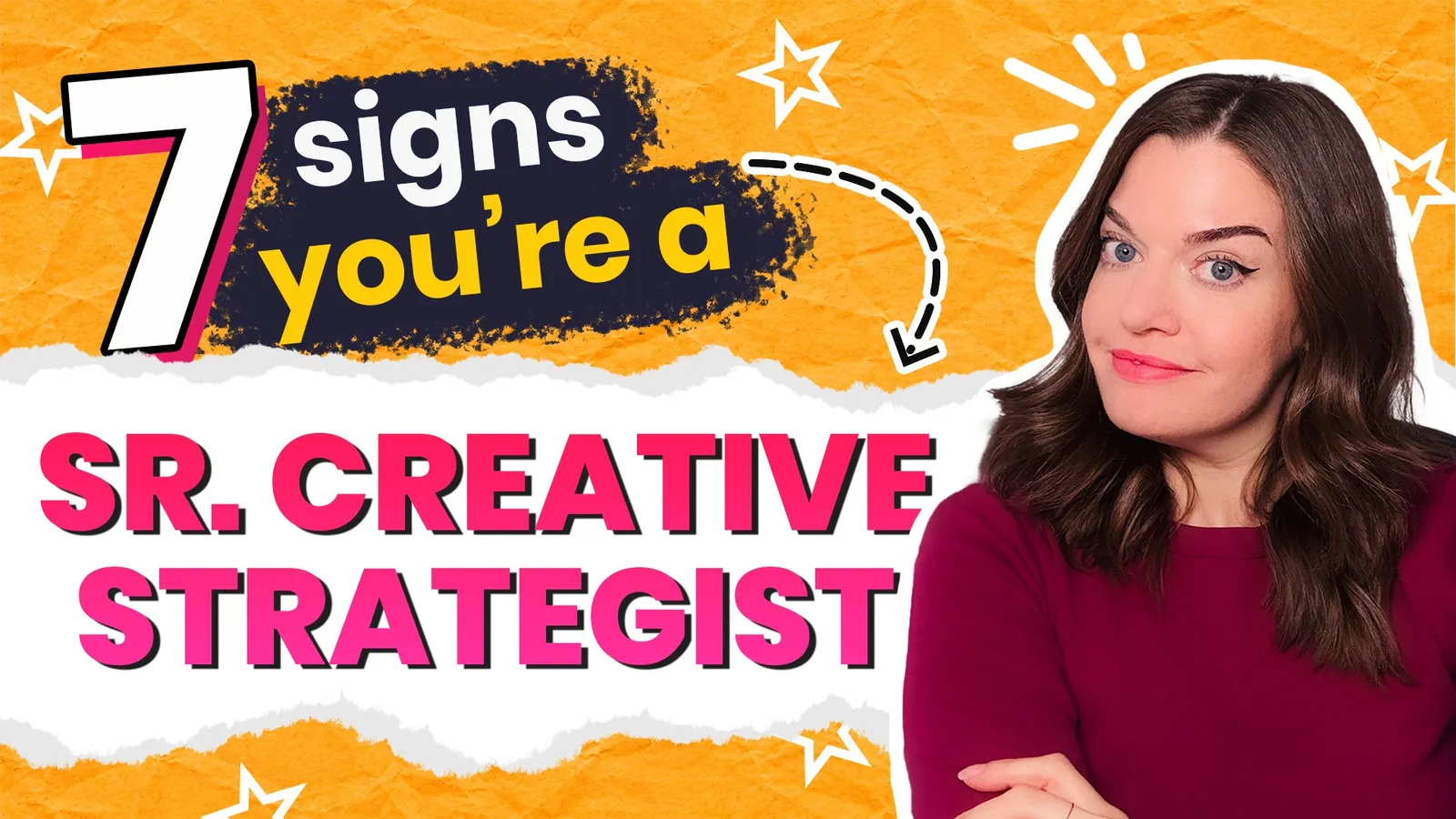
A lot of people are walking around with the title of senior creative strategist who are not actually senior creative strategists.
And a lot of founders and heads of growth are paying senior salaries without getting senior output.
But there are also people doing genuinely senior level work without the title or the pay to match.
This post is for all three groups.
The Three Levels of Creative Strategists
The gap between levels has nothing to do with how long you have been in the industry.
There are people two years in who are operating at a senior level. And people five years in who are still waiting to be told what to make.
Here is how the levels actually break down:
Junior strategists execute, but still need guidance. They are learning.
Creative strategists execute independently and do it well.
Senior strategists need no direction at all. They see the whole board and they are the ones moving the pieces.
Now, here are the seven signs that separate them.
Sign 1: They Build Personas Around Psychology, Not Demographics
A junior strategist builds a persona that sounds like this:
Female, 28 to 45, disposable income, loves cooking, has kids.
A creative strategist takes it further:
She is a working mom. Time starved. Buying this as a gift. Probably procrastinating.
A senior strategist asks something different entirely:
Who is she at the exact moment before she decides to buy? What is she afraid of? What finally pushed her to click? What is happening in her life right now that makes this product relevant?
A persona is not a marketing profile. It is a person mid decision.
A junior gives you census data. A senior gives you insight into that person's innermost thoughts at the moment that matters most.
Sign 2: They Think Past the Ad
A junior hands off the ad and moves on to the next brief. Job done when creative is locked.
A creative strategist tracks performance and flags when something is not working. They know the ad, the account, and the numbers.
A senior strategist looks at what happens after the click. The landing page. The offer. The checkout flow.
If the ad is working but the product is not selling, they know where to look.
A real example:
Leading up to Black Friday, Joanna was building female gifting personas for Birddogs when she noticed the landing pages were only built for men buying for themselves. Men know their own bodies. They do not need a lot of information to decide.
But women buying gifts for their husbands or sons needed to understand fit and materials. That information was not there. The creative was fine. The problem was downstream.
They fixed the landing page. Sold out three times over. Blew past holiday expectations. Unlocked new audiences.
That was not an ad fix. That was a strategist seeing past her ads.
Sign 3: They Are Ahead of the Curve on AI
A junior strategist either underuses AI out of fear, or overuses it to the point where the work becomes hollow. The briefs look polished. But there is no real customer insight behind them. No point of view. Just well formatted nothing.
A creative strategist uses AI to move faster. Research, formatting, first drafts. It saves time, but they are still the ones directing it.
A senior strategist is already testing tools nobody on the team has heard of yet. They are not waiting to be told how to use AI. They are figuring it out first and sharing that knowledge with everyone else.
Sign 4: They Build Systems, Not Just Ads
A junior works inside the system.
A creative strategist works efficiently inside the system and probably has ideas on how to improve it.
A senior strategist is actively shaping it. They work with the director to make sure the system works for both the people running it day to day and the people overseeing it from above.
This is where tools like Recharm come in naturally. When a senior strategist builds a creative system, they need everyone on the team working from the same organized library. Footage tagged by creator, product, scene type, and performance history. Briefs linked to actual clips. No one hunting through folders. Recharm is built specifically for this, so the system runs without the director having to hold it together manually.
When Joanna built Hexclad's paid media creative department from scratch, her senior strategist Alyssa was right there building it with her. That is what a senior strategist does. They are the director's right hand and their number one collaborator.
Collaboration is where greatness in creative strategy actually happens.
Sign 5: They Think Long-Term and Seasonally
Ask a junior what they are working on. They will tell you about their next ad.
Ask a creative strategist. They will tell you about their next sprint.
Ask a senior strategist. They will tell you where they are in the year and how seasonality is affecting what they are building next.
Black Friday does not start in November. It starts in September or earlier.
By the time the sales go live, a senior strategist has already spent weeks making sure the audience knows exactly why they need the product. They are not reacting to the calendar. They are ahead of it.
Sign 6: They See the Ecosystem, Not Just Their Brand
A junior is heads down in their own account. Their brand, their formats, their metrics. That is their whole world.
A creative strategist watches competitors and organic trends. They build swipe files. They stay current.
A senior strategist knows what Meta is testing right now. They know what is shifting in consumer behavior. They know which angles are getting saturated across the industry, not just within their own account.
They are in the webinars. Following the thought leaders. Watching platform updates before anyone else on the team has even heard of them.
If they are really good, they are the ones sending the Slack message to the whole team before the founder does.
Sign 7: They Communicate Their Thinking Up and Down
A junior does the work.
A creative strategist does the work well and can explain it.
A senior strategist can teach it, sell it, and get buy-in from anyone in the room.
They can sit with a junior and explain exactly why a concept worked and how to replicate it. They make the people around them better, not just themselves.
They can also manage up. They can walk a CMO or CEO through the strategic thinking behind a campaign and make the case for why a specific test deserves budget.
Going back to the Birddogs story: spotting the landing page issue was one thing. But convincing the team that the fix was necessary and urgent was a completely different skill. That is sign seven.
The insight alone does not move the business. Your ability to communicate it and get others to act is what moves the business.
And the best senior strategists are also the best at hiring. They can assess other strategists accurately because they have all the skills themselves. It takes one to know one.
If the only person who benefits from how you think is you, you are not a senior strategist.
Senior means your thinking is contagious.
What These Levels Mean for Your Paycheck
Going from junior to creative strategist is how you break six figures.
Getting from creative strategist to senior is how you start earning $150,000 or more.
Here is the honest reality: most people with a senior title are solid on two or three of these signs. The people actually earning senior-level impact and pay are doing all seven.
And most of the time, no one is telling you which ones you are missing.
How to Move Up the Ladder
If you are a strategist:
Go back through the seven signs. Identify where you are weakest. Research on your own, follow thought leaders, go to webinars, and ask your manager for honest feedback.
Do not wait for someone to hand you the path. Demonstrate that you have put in the work and you are ready for the next level.
If you are already doing senior-level work without the title or pay, bring data-backed examples to your next one-on-one. Make the case. You should be getting paid for what you are already doing.
If you are a manager:
Go through these signs with your team. Identify who is strong in which areas. Pair people with complementary strengths so knowledge spreads across the team.
You do not always need a new hire. Sometimes you just need your team to share what they already know.
The Standard of a Senior Creative Strategist
The difference between a junior and a senior creative strategist is not time. It is thinking.
It is the ability to build a persona that captures a real human decision, not a demographic box. To track what happens after the click. To build systems that outlast any single campaign. To communicate strategy in a way that gets people to act.
Most people are strong on a few of these signs. The ones who do all seven are the ones who build creative departments that actually scale, hit their numbers consistently, and earn what they deserve.
Go through the list. Be honest with yourself. And go get what you have already earned.
Frequently Asked Questions
What is the difference between a creative strategist and a senior creative strategist?
A creative strategist executes independently and does it well. A senior creative strategist needs no direction, sees the full picture, builds systems, thinks seasonally, and communicates strategy across the entire organisation. The difference is not years of experience. It is the depth and independence of their thinking.
How long does it take to become a senior creative strategist?
There is no fixed timeline. Some people get there in two years. Others with five years of experience are still operating at a junior level. What matters is whether you have developed the seven signs, not how long you have been in the industry.
What salary can a senior creative strategist expect?
Moving from junior to creative strategist is typically how you break into a six-figure salary. Reaching the senior level is how you start earning $150,000 or more. The key is being strong across all seven signs, not just two or three.
How do I know if I am already operating at a senior level?
Go through the seven signs in this post. If you are building personas around psychology, thinking past the ad, ahead of the curve on AI, building systems, thinking seasonally, watching the ecosystem, and communicating your thinking up and down the organisation, you are likely operating at a senior level already.
What should I do if I am doing senior-level work without the title or pay?
Document your impact with data. Bring specific examples to your next one-on-one with your manager. Use the seven signs framework to make the case for where you are operating. If you are doing the work, you should be getting paid for it.